
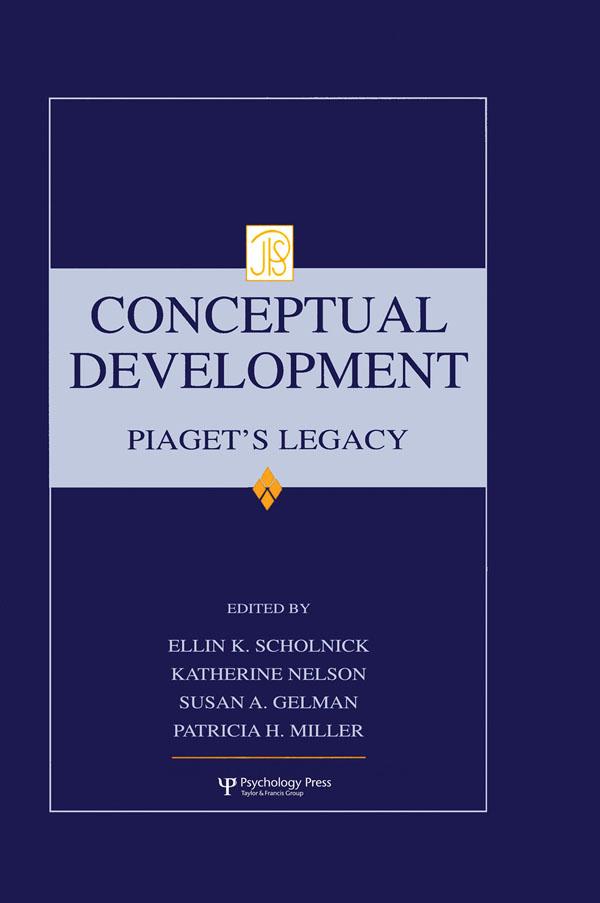
This book examines a key issue in current cognitive theories - the nature of representation. Each chapter is characterized by attempts to frame hot topics in cognitive development within the landscape of current developmental theorizing and the past legacy of genetic epistemology. The chapters address four questions that are fundamental to any developmental line of inquiry:
- How should we represent the workings and contents of the mind?
- How does the child construct mental models during the course of development?
- What are the origins of these models? and
- What accounts for the novelties that are the products and producers of developmental change?
These questions are situated in a historical context, Piagetian theory, and contemporary researchers attempt to trace how they draw upon, depart from, and transform the Piagetian legacy to revisit classic issues such as the child's awareness of the workings of mental life, the child's ability to represent the world, and the child's growing ability to process and learn from experience. The theoretical perspectives covered include constructivism, connectionism, theory-theory, information processing, dynamical systems, and social constructivist approaches. The research areas span imitation, mathematical reasoning, biological knowledge, language development, and theory of mind.
Written by major contributors to the field, this work will be of interest to students and researchers wanting a brief but in-depth overview of the contemporary field of cognitive development.
Pay easily by card, Klarna, Apple Pay or Google Pay. Not happy? You always have a 14-day money-back guarantee. Read more in our terms. If you have any questions, email us at hello@memmo.org.
Memmo makes studying easier – wherever you are in the world. We bring your course books and smart study tools together in one place: summaries, quizzes, podcasts and flashcards. Plus Ted, your study buddy who answers anything you wonder. Over 50,000 students already study here – built to help you learn faster and stress less.