
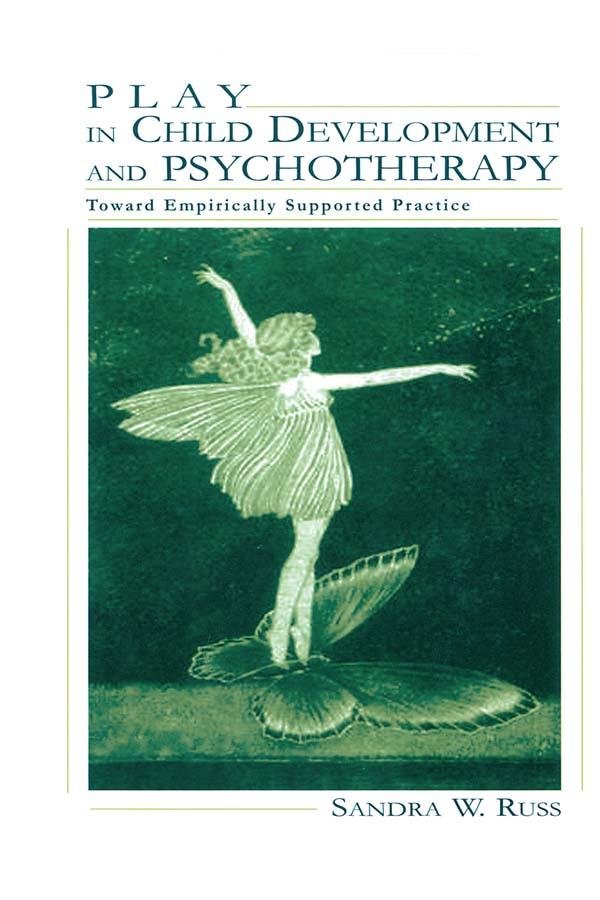
Child psychotherapy is in a state of transition. On the one hand, pretend play is a major tool of therapists who work with children. On the other, a mounting chorus of critics claims that play therapy lacks demonstrated treatment efficacy. These complaints are not invalid. Clinical research has only begun.
Extensive studies by developmental researchers have, however, strongly supported the importance of play for children. Much knowledge is being accumulated about the ways in which play is involved in the development of cognitive, affective, and personality processes that are crucial for adaptive functioning. However, there has been a yawning gap between research findings and useful suggestions for practitioners.
Play in Child Development and Psychotherapy represents the first effort to bridge the gap and place play therapy on a firmer empirical foundation. Sandra Russ applies sophisticated contemporary understanding of the role of play in child development to the work of mental health professionals who are trying to design intervention and prevention programs that can be empirically evaluated. Never losing sight of the complex problems that face child therapists, she integrates clinical and developmental research and theory into a comprehensive, up-to-date review of current approaches to conceptualizing play and to doing both therapeutic play work with children and the assessment that necessarily precedes and accompanies it.
Pay easily by card, Klarna, Apple Pay or Google Pay. Not happy? You always have a 14-day money-back guarantee. Read more in our terms. If you have any questions, email us at hello@memmo.org.
Memmo makes studying easier – wherever you are in the world. We bring your course books and smart study tools together in one place: summaries, quizzes, podcasts and flashcards. Plus Ted, your study buddy who answers anything you wonder. Over 50,000 students already study here – built to help you learn faster and stress less.