
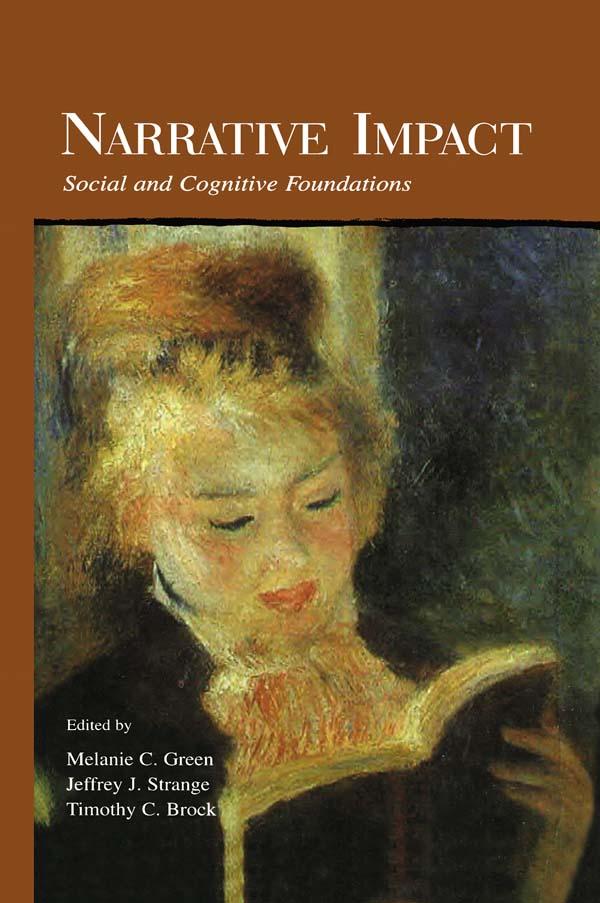
The impact of public narratives has been so broad (including effects on beliefs and behavior but extending beyond to emotion and personality), that the stakeholders in the process have been located across disciplines, institutions, governments, and, indeed, across epochs. Narrative Impact draws upon scholars in diverse branches of psychology and media research to explore the subjective experience of public narratives, the affordances of the narrative environment, and the roles played by narratives in both personal and collective spheres. The book brings together current theory and research presented primarily from an empirical psychological and communications perspective, as well as contributions from literary theory, sociology, and censorship studies.
To be commensurate with the broad scope of influence of public narratives, the book includes the narrative mobilization of major social movements, the formation of self-concepts in young people, banning of texts in schools, the constraining impact of narratives on jurors in the court room, and the wide use of education entertainment to affect social changes.
Taken together, the interdisciplinary nature of the book and its stellar list of contributors set it apart from many edited volumes. Narrative Impact will draw readership from various fields, including sociology, literary studies, and curriculum policy.
Providing new explanatory concepts, this book:
*is the first account on the psychology of narrative persuasion and brings together the relevant conceptualizations from within various sectors of psychology together with the major issues that concern cognate disciplines outside of psychology;
*focuses on understanding the mechanisms that underlie the power of public narratives to achieve broad historical and social changes;
*offers breakthroughs to the future: the role of "presence" in virtual reality narratives; the role of "zines" in females' fashioning of their selves; and the central role of imagery in transportation into narrative worlds;
*explains varying roles of emotion in narrative immersion; and
*addresses the growing blurring of fact and fiction: mechanisms and implications for beliefs and behavior.
Pay easily by card, Klarna, Apple Pay or Google Pay. Not happy? You always have a 14-day money-back guarantee. Read more in our terms. If you have any questions, email us at hello@memmo.org.
Memmo makes studying easier – wherever you are in the world. We bring your course books and smart study tools together in one place: summaries, quizzes, podcasts and flashcards. Plus Ted, your study buddy who answers anything you wonder. Over 50,000 students already study here – built to help you learn faster and stress less.