
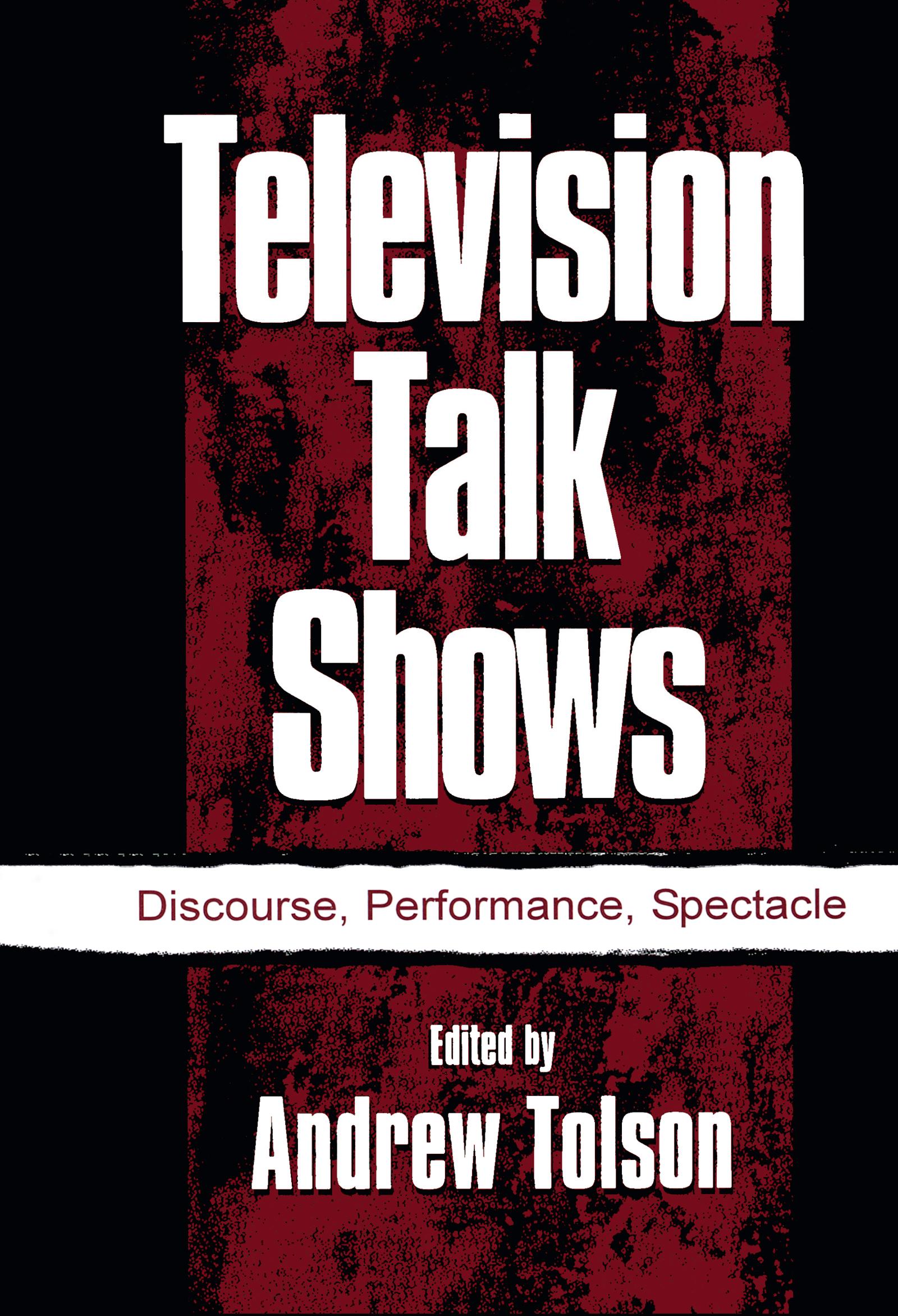
The "talk show" has become a ubiquitous feature of American and European television. The various examples have been frequently discussed by academic commentators, as well as journalists in an attempt to place them in a cultural setting. Ultimately, the conclusion is reached by both academics and non-academics that talk shows matter because they are a focus for considerable public debate and are crucial to the landscape of popular television.
All the variations of talk shows, from chat shows to celebrity interviews, have key elements in common: They all feature groups of guests, not individual interviewees, and they all involve audience participation. The studio audience is not only visible, but is given the opportunity to comment and intervene.
Other books have applied academic analysis to the phenomenon of these shows, but this is the first to analyze the actual "talk" of the talk shows, and in that sense it is closer to discourse analysis than to other forms of analysis. This book provides a systematic empirical study of the broadcast talk in talk shows and maps out the range of formats that appear in the major American and British television shows. The contributors are members of an international network of researchers interested in the study of broadcast talk.
Pay easily by card, Klarna, Apple Pay or Google Pay. Not happy? You always have a 14-day money-back guarantee. Read more in our terms. If you have any questions, email us at hello@memmo.org.
Memmo makes studying easier – wherever you are in the world. We bring your course books and smart study tools together in one place: summaries, quizzes, podcasts and flashcards. Plus Ted, your study buddy who answers anything you wonder. Over 50,000 students already study here – built to help you learn faster and stress less.
You might also like
Buy the book0