
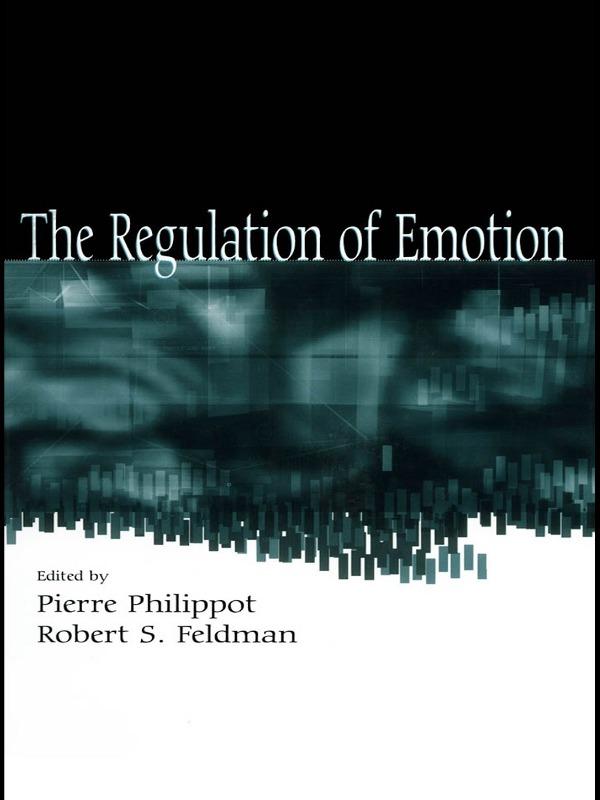
The main goal of this volume is to present, in an integrated framework, the newest, most contemporary perspectives on emotion regulation. The book includes empirically-grounded work and theories that are central to our understanding of the processes that constitute emotion regulation and their consequences.
This volume has several secondary aims, as well. One is to highlight several newer subareas in the domain of emotion regulation that hold much promise, such as the relationship between psychopathology and emotion regulation. The book also presents data and theory that have applied value that may be useful for people working in such fields as communication, psychotherapy, and counseling. Finally, the volume gathers contributions across a variety of subfields and includes authors working not just in North America but in other areas of the world.
To help achieve these goals, the volume has been organized to begin with the presentation of the most molecular aspects of emotion regulation and to end with the most molar ones. It comprises four parts, each integrating different lines of research from related domains. Part I is devoted to basic processes in emotion regulation, such as neurological, physiological or cognitive processes; part II examines the interplays between emotion regulation and individual regulation; part III presents work on individual differences and developmental processes in emotion regulation; and part IV examines the social functions and constraints of emotion regulation.
Pay easily by card, Klarna, Apple Pay or Google Pay. Not happy? You always have a 14-day money-back guarantee. Read more in our terms. If you have any questions, email us at hello@memmo.org.
Memmo makes studying easier – wherever you are in the world. We bring your course books and smart study tools together in one place: summaries, quizzes, podcasts and flashcards. Plus Ted, your study buddy who answers anything you wonder. Over 50,000 students already study here – built to help you learn faster and stress less.