
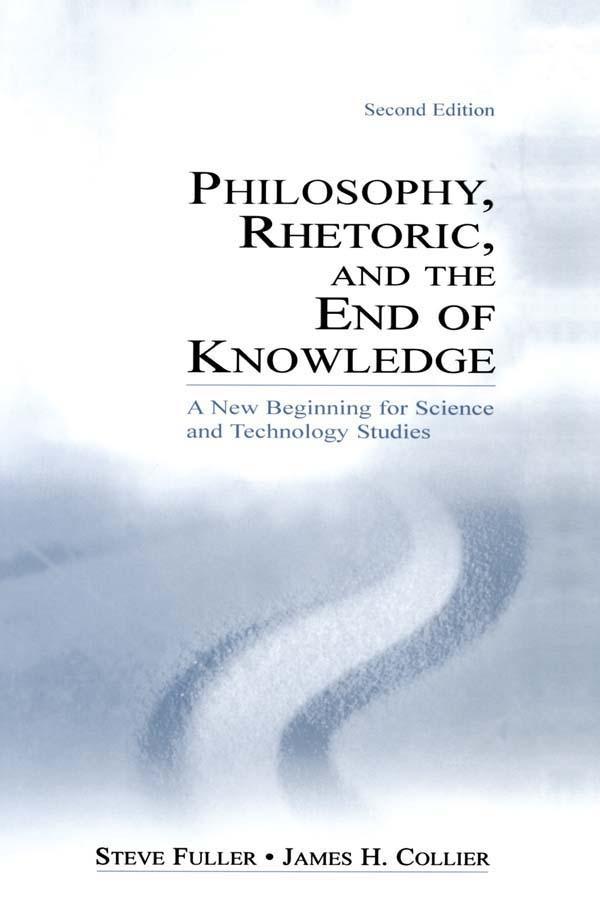
In this second edition of Steve Fuller's original work Philosophy, Rhetoric, and the End of Knowledge: A New Beginning for Science and Technology Studies, James Collier joins Fuller in developing an updated and accessible version of Fuller's classic volume. The new edition shifts focus slightly to balance the discussions of theory and practice, and the writing style is oriented to advanced students. It addresses the contemporary problems of knowledge to develop the basis for a more publicly accountable science. The resources of social epistemology are deployed to provide a positive agenda of research, teaching, and political action designed to bring out the best in both the ancient discipline of rhetoric and the emerging field of science and technology studies (STS). The authors reclaim and integrate STS and rhetoric to explore the problems of knowledge as a social process--problems of increasing public interest that extend beyond traditional disciplinary resources. In so doing, the differences among disciplines must be questioned (the exercise of STS) and the disciplinary boundaries must be renegotiated (the exercise of rhetoric).
This book innovatively integrates a sophisticated theoretical approach to the social processes of creating knowledge with a developing pedagogical apparatus. The thought questions at the end of each chapter, the postscript, and the appendix allow the reader to actively engage the text in order to discuss and apply its theoretical insights. Creating new standards for interdisciplinary scholarship and communication, the authors bring numerous disciplines into conversation in formulating a new kind of rhetoric geared toward greater democratic participation in the knowledge-making process.
This volume is intended for students and scholars in rhetoric of science, science studies, philosophy, and communication, and will be of interest in English, sociology, and knowledge management arenas as well.
Pay easily by card, Klarna, Apple Pay or Google Pay. Not happy? You always have a 14-day money-back guarantee. Read more in our terms. If you have any questions, email us at hello@memmo.org.
Memmo makes studying easier – wherever you are in the world. We bring your course books and smart study tools together in one place: summaries, quizzes, podcasts and flashcards. Plus Ted, your study buddy who answers anything you wonder. Over 50,000 students already study here – built to help you learn faster and stress less.