
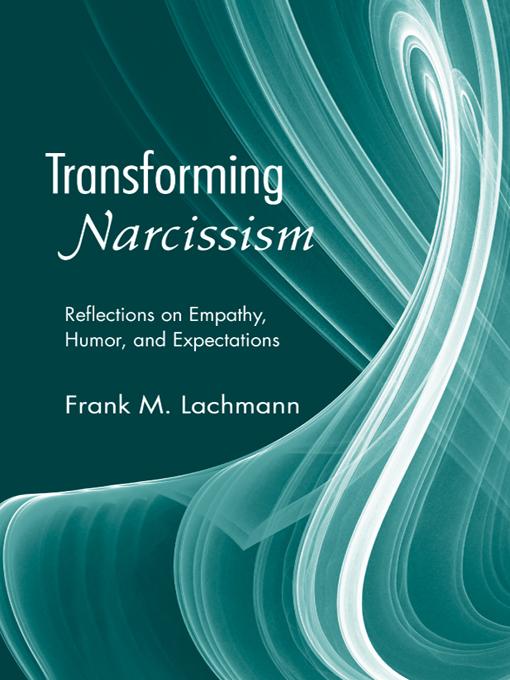
Using Kohut's seminal paper "Forms and Transformations of Narcissism" as a springboard, Frank Lachmann updates Kohut's proposals for contemporary clinicians. Transforming Narcissism: Reflections on Empathy, Humor, and Expectations draws on a wide range of contributions from empirical infant research, psychoanalytic and psychotherapeutic practice, social psychology, and autobiographies of creative artists to expand and modify Kohut's proposition that archaic narcissism is transformed in the course of development or through treatment into empathy, humor, creativity, an acceptance of transience and wisdom.
He asserts that empathy, humor, and creativity are not the goals or end products of transformations, but are an intrinsic part of the ongoing therapist-patient dialogue throughout treatment. The transformative process is bidirectional, impacting both patient and therapist, and their affect undergoes transformation - for example from detached to intimate - and narcissism or self-states are transformed secondarily as a consequence of the affective interactions. Meeting or violating expectations of emotional responsivity provides a major pathway for transformation of affect.
For beginning therapists, Transforming Narcissism presents an engaging approach to treatment that incorporates the therapeutic action of these transformations, but also leaves room for therapists to develop styles of their own. For more experienced therapists, it fills a conceptual and clinical gap, provides a scaffold for crucial aspects of treatment that are often unacknowledged (because they are not "analytic"), or are dismissed and pejoratively labeled "countertransference." Most importantly, Lachmann offers a balance between therapeutic spontaneity and professional constraint. Focused and engaging, Transforming Narcissism provides a bridge from self psychology to a rainbow of relational approaches that beginning and seasoned therapists can profitably traverse in either direction.
Dr. Lachmann contributed to an article on empathy in the April, 2008 issue of O magazine, pp. 230.
Pay easily by card, Klarna, Apple Pay or Google Pay. Not happy? You always have a 14-day money-back guarantee. Read more in our terms. If you have any questions, email us at hello@memmo.org.
Memmo makes studying easier – wherever you are in the world. We bring your course books and smart study tools together in one place: summaries, quizzes, podcasts and flashcards. Plus Ted, your study buddy who answers anything you wonder. Over 50,000 students already study here – built to help you learn faster and stress less.