
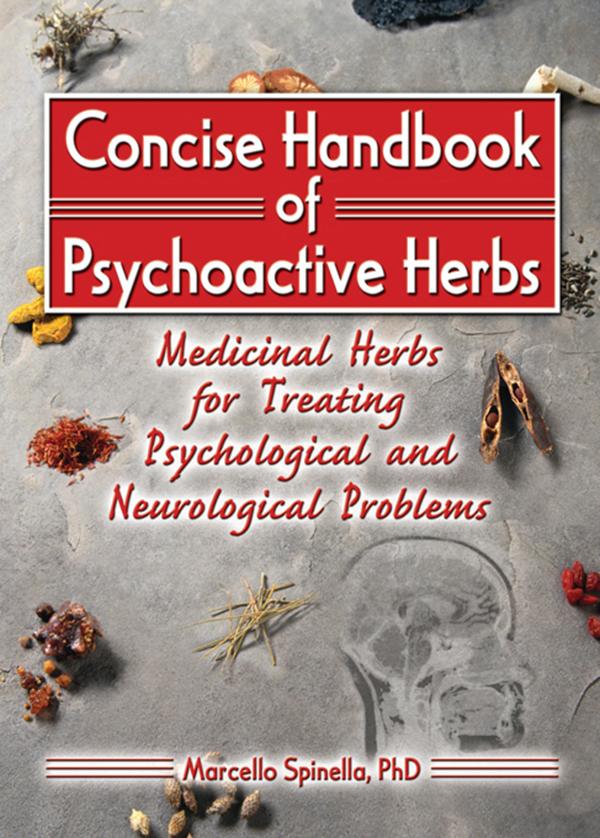
Find out how plant-derived drugs react with your brain to produce either healing or harmful results!
The Concise Handbook of Psychoactive Herbs will give you a better understanding of herbal products that have psychological effects. The book explores how they work, how effective they are, and what is known about their safety. Geared towards non-specialist professionals and curious individuals, this guide shows how herbal preparations can affect the brain, mental state, and behavior of a user and includes treatment methods, tables, illustrations, a glossary, and a bibliography.
The Concise Handbook of Psychoactive Herbs contains chapters on several types of psychoactive herbs, including:
- stimulants
- cognition-enhancers
- sedatives
- painkillers
- hallucinogens
With the Concise Handbook of Psychoactive Herbs, you’ll examine the effects of psychoactive drugs on the nervous systemboth positive and negative. Each chapter discusses a type of herbal medicine, its action on the brain and other systems of the body, side effects, and the potential for addiction. The book closely examines possible drug interactions with prescription medications and emphasizes the caution you need to take when using herbal health products.
In the Concise Handbook of Psychoactive Herbs you will learn about the psychoactive actions of such medicinal plants as:
- coffee
- tobacco
- cannabis
- ginseng
- chamomile
- cocoa
- opium poppy
- peyote
- gingko biloba
Pay easily by card, Klarna, Apple Pay or Google Pay. Not happy? You always have a 14-day money-back guarantee. Read more in our terms. If you have any questions, email us at hello@memmo.org.
Memmo makes studying easier – wherever you are in the world. We bring your course books and smart study tools together in one place: summaries, quizzes, podcasts and flashcards. Plus Ted, your study buddy who answers anything you wonder. Over 50,000 students already study here – built to help you learn faster and stress less.