
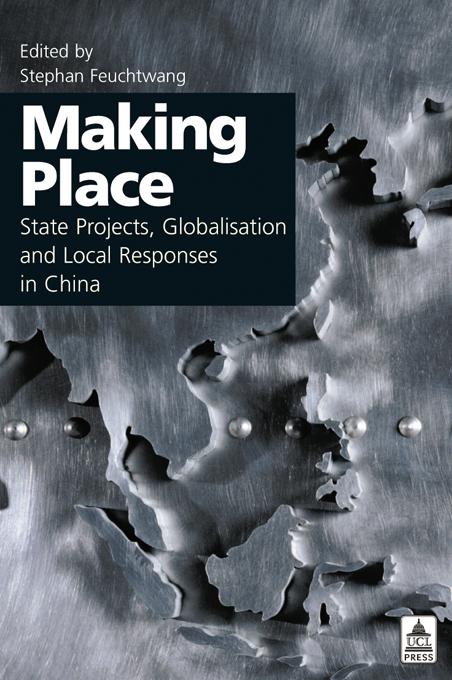
To make a place is to create a location where its creators can feel they belong. Processes of place-making are still very much ongoing today. Geographers, sociologists, political scientists and philosophers of advanced capitalism have said that place is a localisation of the global. However, the creation of a place is not legible from such grand perspectives. It is also much more creative than can be predicted by translating large-scale processes into local cultures.
Anthropologists have been sensitive to the intimate, tragic and lyrical senses of local place. But their theorising has been too much bound up with cosmology and insufficiently with the intermediate scales of state and local state.<br><br>
In this book, Stephan Feuchtwang and his contributors offer a set of historical, anthropological and scale-mediated studies from China - a country that includes a subcontinental variety of cultures and landscapes. In the twentieth century it experienced collapse in civil war and was then reasserted as a particularly strong state. Now it is managing the fastest growing capitalist economy in the world. These intriguing Chinese studies contribute to the anthropology of place and space, providing an historical perspective on processes of change and of accommodation to disruption.
The stories they tell are fascinating in their own right, but in addition, the result is a critical reformulation of previous theories of place that geographers, philosophers, historians, and anthropologists will find of great interest.
Pay easily by card, Klarna, Apple Pay or Google Pay. Not happy? You always have a 14-day money-back guarantee. Read more in our terms. If you have any questions, email us at hello@memmo.org.
Memmo makes studying easier – wherever you are in the world. We bring your course books and smart study tools together in one place: summaries, quizzes, podcasts and flashcards. Plus Ted, your study buddy who answers anything you wonder. Over 50,000 students already study here – built to help you learn faster and stress less.