
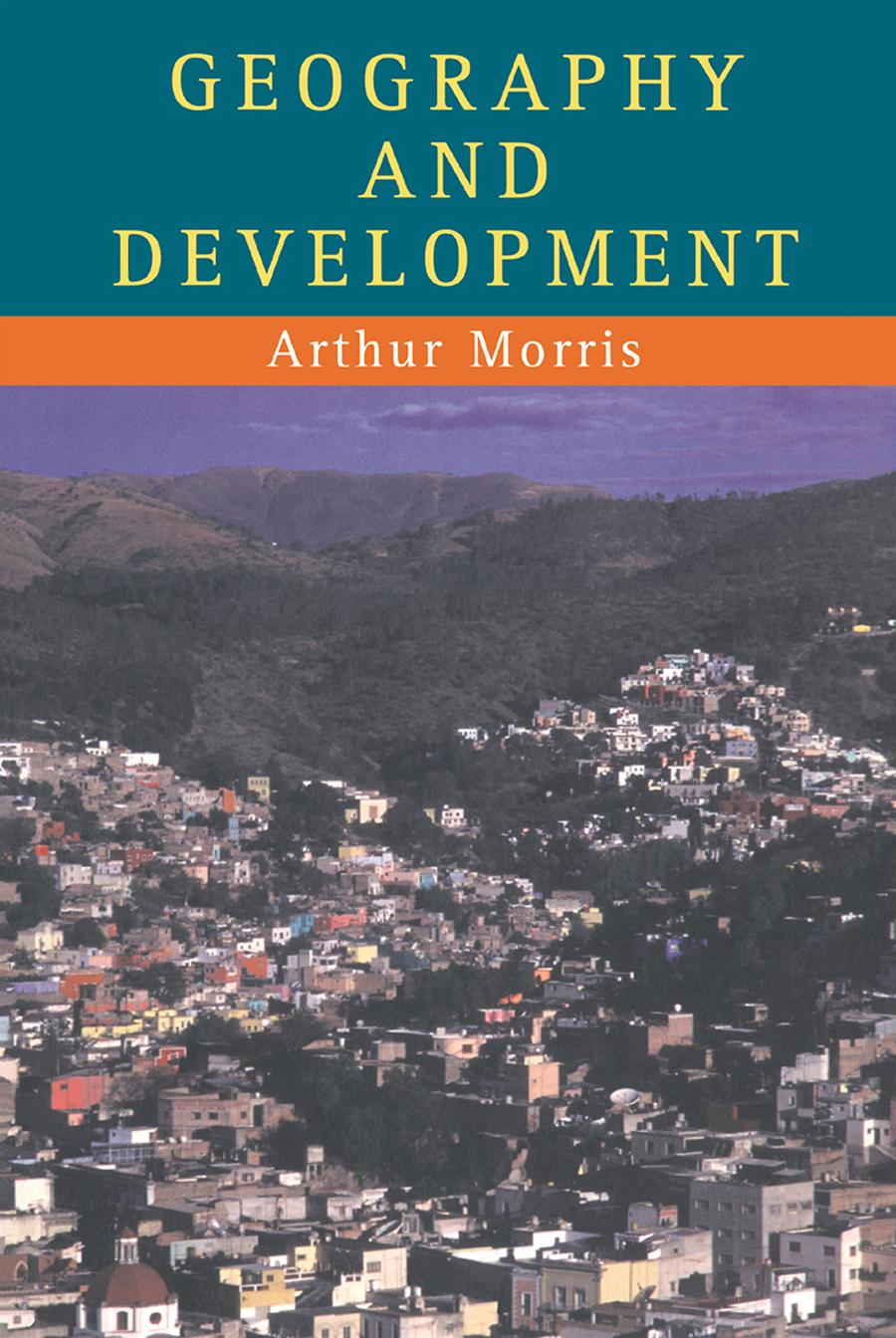
First published in 1998. Written in a highly accessible style, this book examines economic development processes across the world. The old certainties of what constitutes development and whether it is the same for all peoples, no longer exist. Goals once imposed by agencies like the World Bank are increasingly questioned, and the spatial development planning characteristics of the 1960s and 70s is increasingly seen as an intrusion into free and competitive markets. Indeed a question now being asked is : should development be promoted at all? This book examines these fundamental issues and presents and evaluates the different theoretical approaches to development. Each country has its own tale to tell and by using valuable case-study material, the author shows how different policies have impacted on the geography of regions. Processes of development in the newly industrialised countries (NICS) of South Korea and Singapore are examined as well as the flexible specialisation model characteristic of many Mediterranean countries and the post-industrial service economies based on high technology. The book argues convincingly that the fundamental spatial and temporal patterns of development in modern times are no longer the importance of physical resources, but the complex human resources and the determination to work. Anchored firmly in the needs of students this book will be widely welcomed by undergraduates taking courses in human geography and development studies.
Pay easily by card, Klarna, Apple Pay or Google Pay. Not happy? You always have a 14-day money-back guarantee. Read more in our terms. If you have any questions, email us at hello@memmo.org.
Memmo makes studying easier – wherever you are in the world. We bring your course books and smart study tools together in one place: summaries, quizzes, podcasts and flashcards. Plus Ted, your study buddy who answers anything you wonder. Over 50,000 students already study here – built to help you learn faster and stress less.
You might also like
Buy the book0