
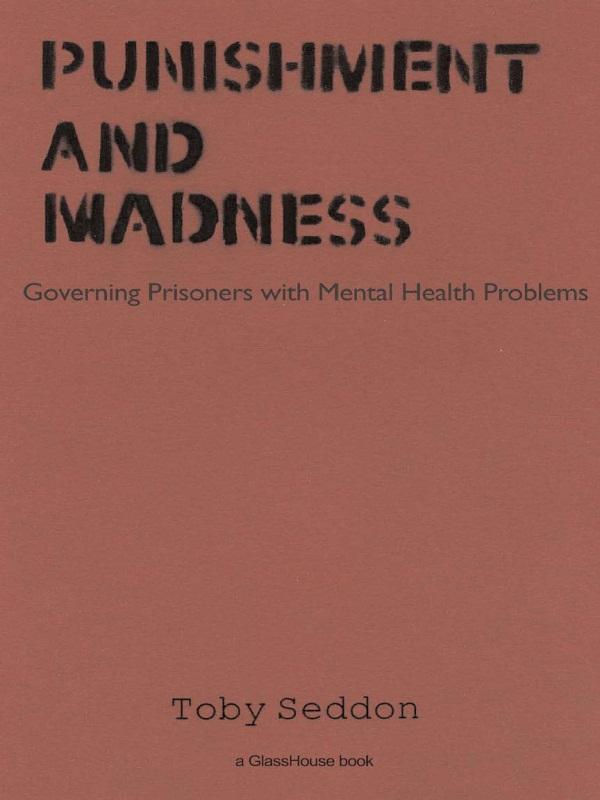
The focus of this book is on the government of prisoners with mental health problems in England and Wales over the last twenty-five years. The wider context and backdrop to the book is the shift to 'late modernity', which, since the 1970s has seen massive structural change in most Western societies, affecting the social, economic and cultural spheres, as well as the field of crime and punishment. This book investigates whether these profound transformations have also led to a reconfiguring of responses to mentally vulnerable offenders who end up in prison. Specifically, it explores how this group of prisoners has come to be viewed increasingly as sources of 'risk', requiring 'management' or containment, rather than as people suitable for therapeutic responses.
The book draws on primary research carried out by the author, including interviews with key informants involved in the field during this period, such as former cabinet ministers, senior civil servants, campaigners and academics. In conducting this investigation, the author has developed a method of research which combines and synthesizes different forms of analysis to create a novel approach to socio-historical research.
Pay easily by card, Klarna, Apple Pay or Google Pay. Not happy? You always have a 14-day money-back guarantee. Read more in our terms. If you have any questions, email us at hello@memmo.org.
Memmo makes studying easier – wherever you are in the world. We bring your course books and smart study tools together in one place: summaries, quizzes, podcasts and flashcards. Plus Ted, your study buddy who answers anything you wonder. Over 50,000 students already study here – built to help you learn faster and stress less.