
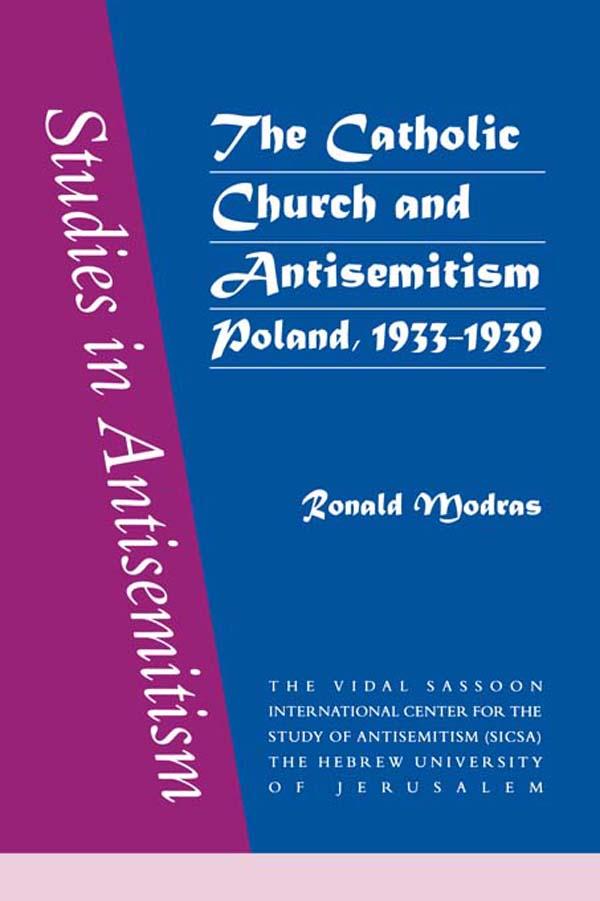
Interwar Poland was home to more Jews than any other country in Europe. Its commonplace but simplistic identification with antisemitism was due largely to nationalist efforts to boycott Jewish business. That they failed was not for want of support by the Catholic clergy, for whom the ''Jewish question'' was more than economic. The myth of a Masonic-Jewish alliance to subvert Christian culture first flourished in France but held considerable sway over Catholics in 1930s Poland as elsewhere. This book examines how, following Vatican policy, Polish church leaders resisted separation of church and state in the name of Catholic culture. In that struggle, every assimilated Jew served as both a symbol and a potential agent of security. Antisemitism is no longer regarded as a legitimate political stance. But in Europe, the United States, and the Middle East, the issues of religious culture, national identity, and minorities are with us still. This study of interwar Poland will shed light on dilemmas that still effect us today.
Pay easily by card, Klarna, Apple Pay or Google Pay. Not happy? You always have a 14-day money-back guarantee. Read more in our terms. If you have any questions, email us at hello@memmo.org.
Memmo makes studying easier – wherever you are in the world. We bring your course books and smart study tools together in one place: summaries, quizzes, podcasts and flashcards. Plus Ted, your study buddy who answers anything you wonder. Over 50,000 students already study here – built to help you learn faster and stress less.
You might also like
Buy the book0