
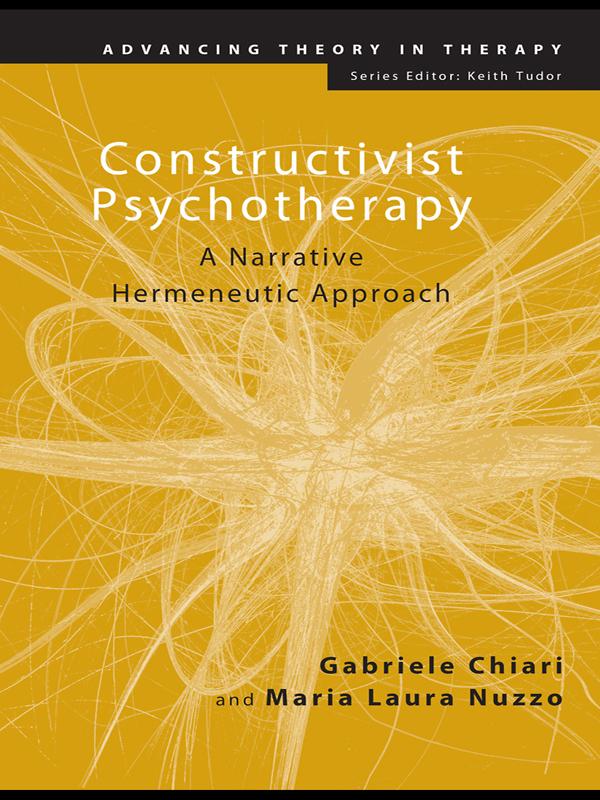
Psychotherapy has undergone major changes in recent years, with a variety of new approaches including cognitive-behavioural therapy joining the more traditional and widespread schools of thought. These new approaches all share the epistemological assumption of constructivism, which states that there are alternative ways of looking at events and that we interpret events according to how we see the world.
Constructivist Psychotherapy reviews the constructivist trends in psychotherapy which link these new approaches, allowing the reader to enter an entirely new dialogue. The book traces constructivist thought, elaborating on Kelly’s personal construct theory and the implications for psychotherapeutic theory and practice.
Areas of discussion include:
- the therapist’s understanding of the client’s narrative
- a constructivist understanding of the person
- psychological constructivism and constructivist trends in psychotherapy
Setting constructivist psychotherapy within its therapeutic, social and philosophical context and using case studies throughout, the book revisits 'Kellian' ideas and theories, bringing them up to date, to explore what it is to be a constructivist psychotherapist today. As such this book will be of interest to all psychotherapists, as well as anyone with an interest in the psychotherapeutic field.
Pay easily by card, Klarna, Apple Pay or Google Pay. Not happy? You always have a 14-day money-back guarantee. Read more in our terms. If you have any questions, email us at hello@memmo.org.
Memmo makes studying easier – wherever you are in the world. We bring your course books and smart study tools together in one place: summaries, quizzes, podcasts and flashcards. Plus Ted, your study buddy who answers anything you wonder. Over 50,000 students already study here – built to help you learn faster and stress less.