
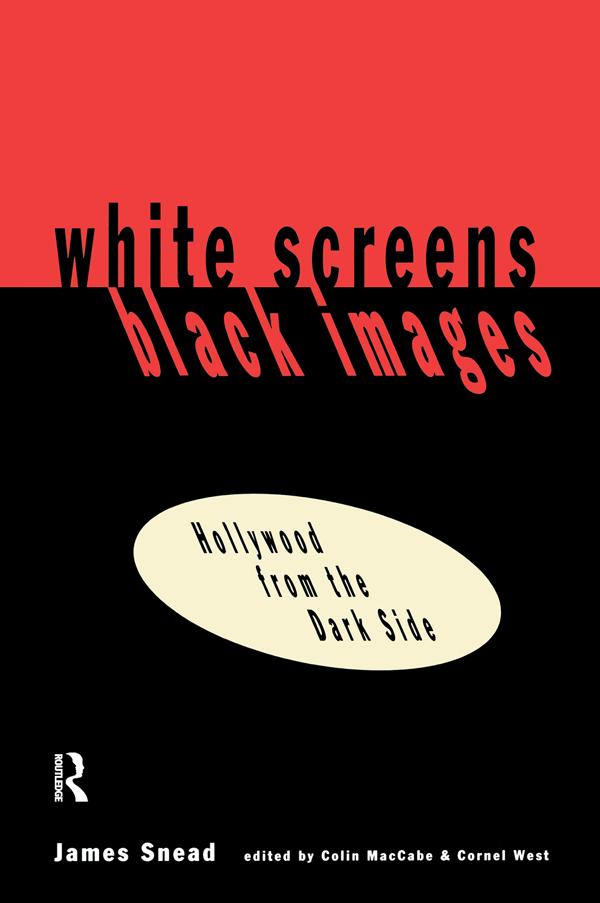
Hollywood's representation of blacks has been consistently misleading, promoting an artificially constructed mythology in place of historical fact. But how, James Snead asks, did black skin on screen develop into a complex code for various types of white supremacist discourse? In these essays, completed shortly before his death in 1989, James Snead offers a thoughtful inquiry into the intricate modes of racial coding in Hollywood cinema from 1915 to 1985. Snead presents three major methods through which the racist ideology within film functions: mythification, in which black images are correlated in a larger sceme of semiotic valuation where the dominant I needs the marginal other in order to function effectively; marking, in which the color black is repeatedly over-determined and redundantly marked, as if to force the viewer to register the image's difference from white; and omission--the repetition of black absence from positions of autonomy and importance. White Screens/Black Images offers an array of film texts, drawn from both classical Hollywood cinema and black independent film culture. Individual chapters analyze Birth of a Nation , King Kong , Shirley Temple in The Littlest Rebel and The Little Colonel , Mae West in I'm No Angel , Marlene Dietrich in Blonde Venus , Bette Davis in Jezebel , the racism of Disney's Song of the South , and Taxi Driver . Making skillful use of developments in both structuralist and post-structuralist film theory, Snead's work speaks not only to the centrality of race in Hollywood films, but to its centrality in the formation of modern American culture.
Pay easily by card, Klarna, Apple Pay or Google Pay. Not happy? You always have a 14-day money-back guarantee. Read more in our terms. If you have any questions, email us at hello@memmo.org.
Memmo makes studying easier – wherever you are in the world. We bring your course books and smart study tools together in one place: summaries, quizzes, podcasts and flashcards. Plus Ted, your study buddy who answers anything you wonder. Over 50,000 students already study here – built to help you learn faster and stress less.