
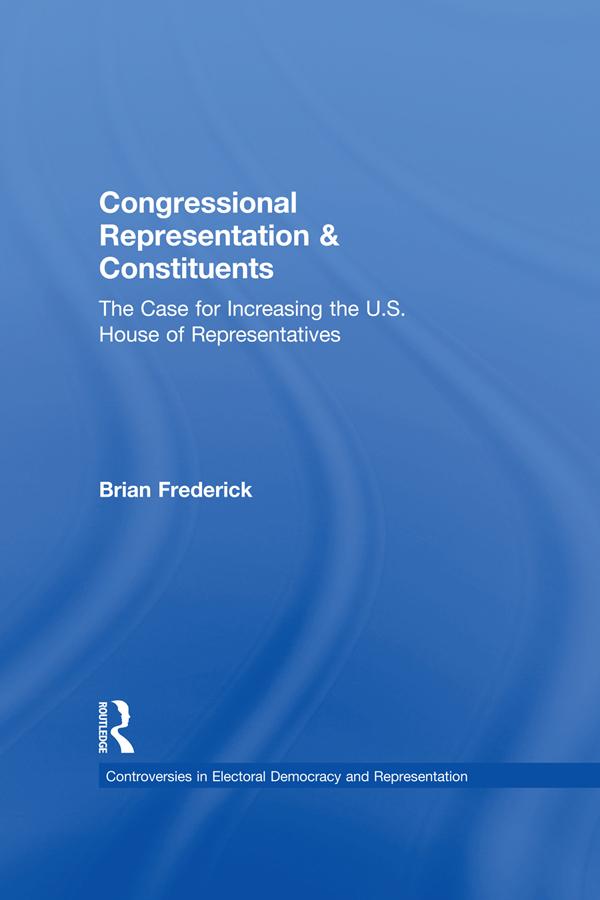
The U.S. House of Representatives has been frozen at 435 members for almost a century, and in that time the nation’s population has grown by more than 200 percent. With the number of citizens represented by each House member now dramatically larger, is a major consequence of this historical disparity a diminished quality of representation?
Brian Frederick uses empirical data to scrutinize whether representation has been undermined by keeping a ceiling on the number of seats available in the House. He examines the influence of constituency size on several metrics of representation—including estimating the effects on electoral competition, policy responsiveness, and citizen contact with and approval of their representatives—and argues that now is the time for the House to be increased in order to better represent a rapidly growing country.
Pay easily by card, Klarna, Apple Pay or Google Pay. Not happy? You always have a 14-day money-back guarantee. Read more in our terms. If you have any questions, email us at hello@memmo.org.
Memmo makes studying easier – wherever you are in the world. We bring your course books and smart study tools together in one place: summaries, quizzes, podcasts and flashcards. Plus Ted, your study buddy who answers anything you wonder. Over 50,000 students already study here – built to help you learn faster and stress less.