
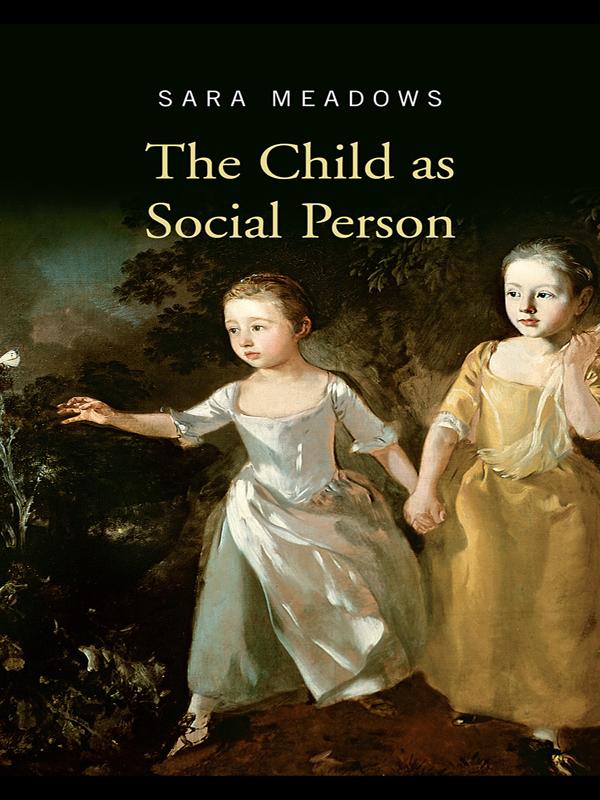
Questions about how children grow up in their social worlds are of enormous significance for parents, teachers, and society at large, as well as for children themselves. Clearly children are shaped by the social world that surrounds them but they also shape the social worlds that they, and those significant to them, encounter. But exactly how does this happen, and what can we do to ensure that it produces happy outcomes?
This book provides a critical review of the psychological literature on the development of personality, social cognition, social skills, social relations and social outcomes from birth to early adulthood. It uses Bronfenbrenner's model of the development of the person and up-to-date evidence to analyse normal and abnormal social development, prosocial and antisocial behaviour, within and across cultures. As well as outlining the theory, the book addresses applied issues such as delinquency, school failure, and social exclusion.
Using a coherent theoretical structure, The Child as Social Person examines material from across the biological and social sciences to present an integrated account of what we do and do not know about the development of the child as a social actor.
The Child as Social Person provides an integrated overview of the exciting field of developmental social psychology, and as such will be essential reading for advanced undergraduate students in psychology, education and social work, as well as postgraduates and researchers in these disciplines.
Pay easily by card, Klarna, Apple Pay or Google Pay. Not happy? You always have a 14-day money-back guarantee. Read more in our terms. If you have any questions, email us at hello@memmo.org.
Memmo makes studying easier – wherever you are in the world. We bring your course books and smart study tools together in one place: summaries, quizzes, podcasts and flashcards. Plus Ted, your study buddy who answers anything you wonder. Over 50,000 students already study here – built to help you learn faster and stress less.