
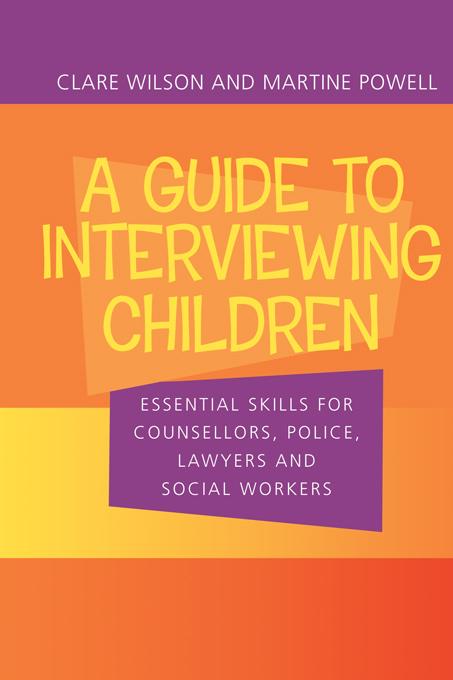
Children may be witnesses to crimes or accidents, or suspected victims of abuse or neglect, or they may be involved in some form of legal action such as custody cases. In these situations, they may need to be interviewed formally, and if this is not done properly, incorrect or inadequate information may be recorded or the child's position may not be correctly represented later in court. In cases of child abuse, the child may not be the only witness, and the quality of their verbal evidence is critical.
A Guide to Interviewing Children is a practical guide the evidential interviewing techniques needed by a range of professionals: social workers, forensic psychologists, lawyers, police and teachers. It outlines basic techniques, explains how to deal with children of different ages (from pre-school to fifteen years), how to deal with parents, the particular issues of sexual abuse, handling multiple interviews of one child and so on. It is written for an international readership, and will be more practical and cover a broader range of contexts than the other titles currently available.
Pay easily by card, Klarna, Apple Pay or Google Pay. Not happy? You always have a 14-day money-back guarantee. Read more in our terms. If you have any questions, email us at hello@memmo.org.
Memmo makes studying easier – wherever you are in the world. We bring your course books and smart study tools together in one place: summaries, quizzes, podcasts and flashcards. Plus Ted, your study buddy who answers anything you wonder. Over 50,000 students already study here – built to help you learn faster and stress less.