
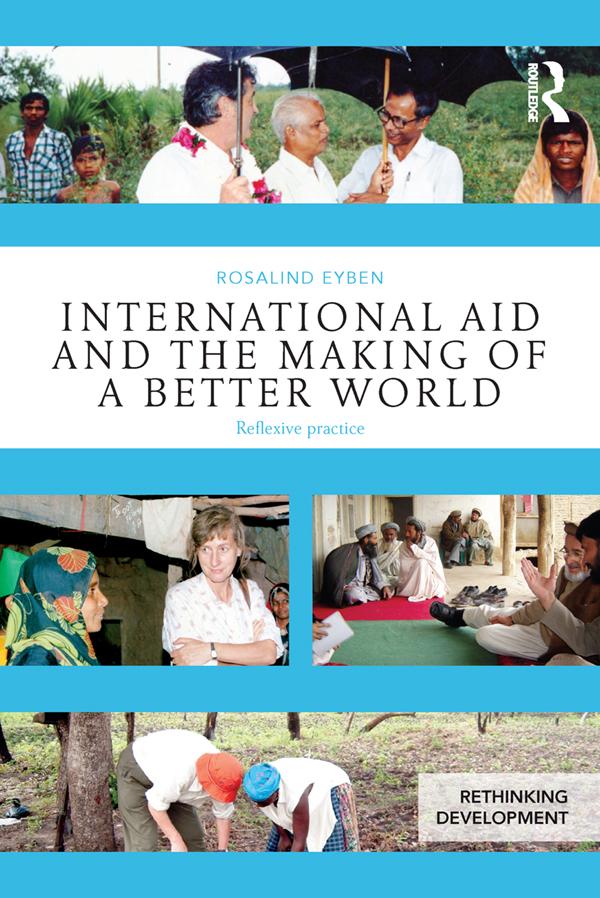
How can international aid professionals manage to deal with the daily dilemmas of working for the wellbeing of people in countries other than their own? A scholar-activist and lifelong development practitioner seeks to answer that question in a book that provides a vivid and accessible insight into the world of aid – its people, ideas and values against the backdrop of a broader historical analysis of the contested ideals and politics of aid operations from the 1960s to the present day.
Moving between aid-recipient countries, head office and global policy spaces, Rosalind Eyben critically examines her own behaviour to explore what happens when trying to improve people’s lives in far-away countries and warns how self-deception may construct obstacles to the very change desired, considering the challenge to traditional aid practices posed by new donors like Brazil who speak of history and relationships. The book proposes that to help make this a better world, individuals and organisations working in international development must respond self-critically to the dilemmas of power and knowledge that shape aid’s messy relations.
Written in an accessible way with vignettes, stories and dialogue, this critical history of aid provides practical tools and methodology for students in development studies, anthropology and international studies and for development practitioners to adopt the habit of reflexivity when helping to make a better world.
Pay easily by card, Klarna, Apple Pay or Google Pay. Not happy? You always have a 14-day money-back guarantee. Read more in our terms. If you have any questions, email us at hello@memmo.org.
Memmo makes studying easier – wherever you are in the world. We bring your course books and smart study tools together in one place: summaries, quizzes, podcasts and flashcards. Plus Ted, your study buddy who answers anything you wonder. Over 50,000 students already study here – built to help you learn faster and stress less.