
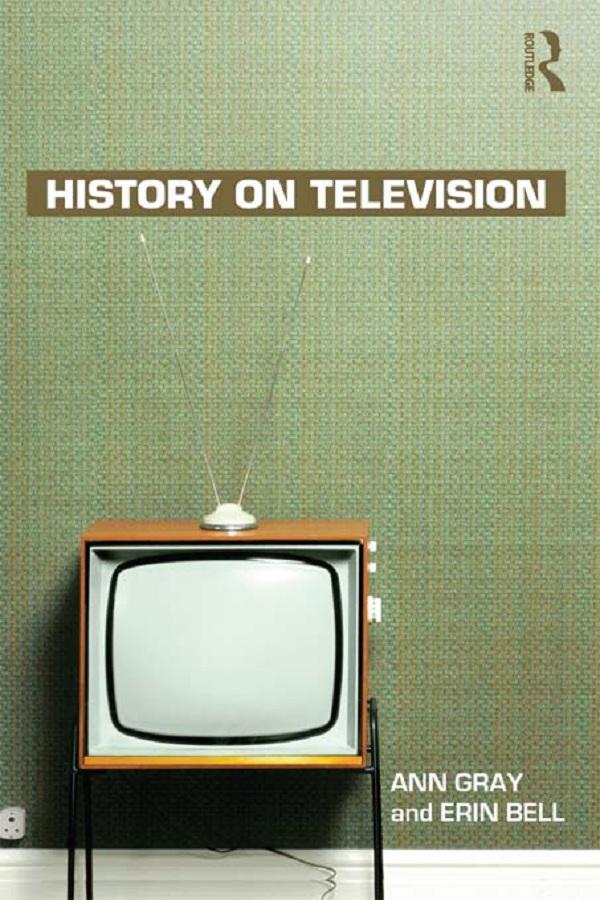
In recent years non-fiction history programmes have flourished on television. This interdisciplinary study of history programming identifies and examines different genres employed by producers and tracks their commissioning, production, marketing and distribution histories.
With comparative references to other European nations and North America, the authors focus on British history programming over the last two decades and analyse the relationship between the academy and media professionals. They outline and discuss often-competing discourses about how to ‘do’ history and the underlying assumptions about who watches history programmes.
History on Television considers recent changes in the media landscape, which have affected to a great degree how history in general, and whose history in particular, appears onscreen. Through a number of case studies, using material from interviews by the authors with academic and media professionals, the role of the ‘professional’ historian and that of media professionals – commissioning editors and producer/directors - as mediators of historical material and interpretations is analysed, and the ways in which the ‘logics of television’ shape historical output are outlined and discussed.
Building on their analysis, Ann Gray and Erin Bell ask if history on television fulfils its potential to be a form of public history through offering, as it does, a range of interpretations of the past to and originating from or including those not based in the academy. Through consideration of the representation, or absence, of the diversity of British identity – gender, ethnicity and race, social status and regional identities – the authors substantially extend the scope of existing scholarship into history on television
History on Television will be essential reading for all those interested in the complex processes involved in the representation of history on television.
Pay easily by card, Klarna, Apple Pay or Google Pay. Not happy? You always have a 14-day money-back guarantee. Read more in our terms. If you have any questions, email us at hello@memmo.org.
Memmo makes studying easier – wherever you are in the world. We bring your course books and smart study tools together in one place: summaries, quizzes, podcasts and flashcards. Plus Ted, your study buddy who answers anything you wonder. Over 50,000 students already study here – built to help you learn faster and stress less.