
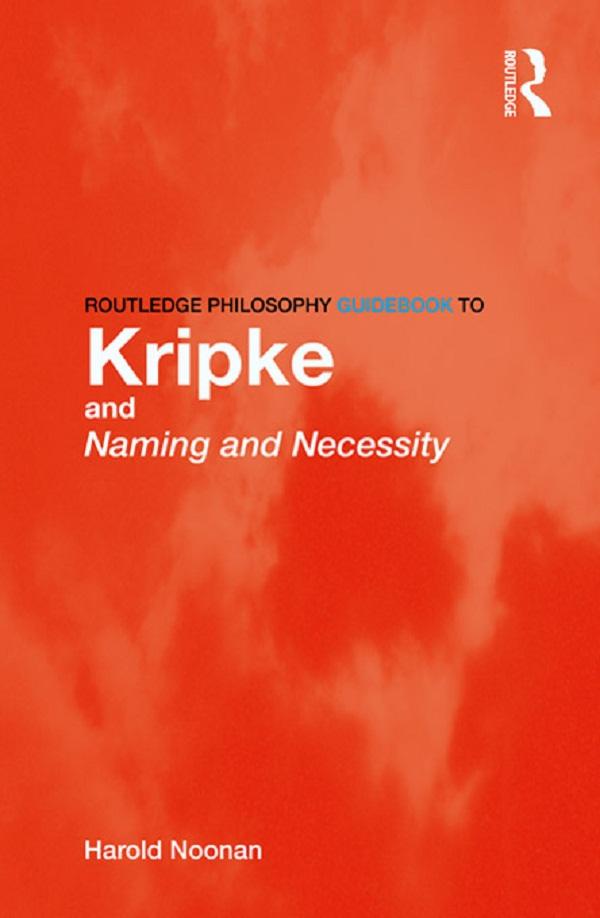
Saul Kripke is one of the most important philosophers of the twentieth century. His most celebrated work, Naming and Necessity, makes arguably the most important contribution to the philosophy of language and metaphysics in recent years. Asking fundamental questions – how do names refer to things in the world? Do objects have essential properties? What are natural kind terms and to what do they refer? – he challenges prevailing theories of language and conceptions of metaphysics, especially the descriptivist account of reference, which Kripke argues is found in Frege, Wittgenstein and Russell, and the anti-essentialist metaphysics of Quine.
In this invaluable guidebook to Kripke's classic work, Harold Noonan introduces and assesses:
- Kripke's life and the background to his philosophy
- the ideas and text of Naming and Necessity
- the continuing importance of Kripke's work to the philosophy of language and metaphysics.
The Routledge Philosophy GuideBook to Kripke and Naming and Necessity is an ideal starting point for anyone coming Kripke's work for the first time. It is essential reading for philosophy students studying philosophy of language, metaphysics, logic, or the history of analytic philosophy.
Pay easily by card, Klarna, Apple Pay or Google Pay. Not happy? You always have a 14-day money-back guarantee. Read more in our terms. If you have any questions, email us at hello@memmo.org.
Memmo makes studying easier – wherever you are in the world. We bring your course books and smart study tools together in one place: summaries, quizzes, podcasts and flashcards. Plus Ted, your study buddy who answers anything you wonder. Over 50,000 students already study here – built to help you learn faster and stress less.