
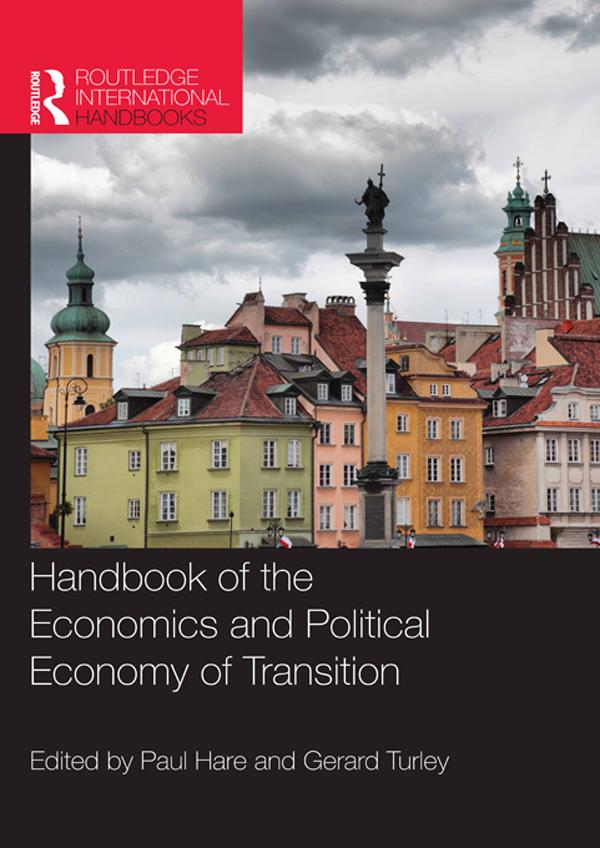
Transition from central planning to a market economy, involving large-scale institutional change and reforms at all levels, is often described as the greatest social science experiment in modern times. As more than two decades have passed since the fall of the Berlin Wall and the collapse of the Soviet Union, it is now an excellent time to take stock of how the transition process has turned out for the economies that have moved on from socialism and the command economy.
This new handbook assembles a team of leading experts, many of whom were closely involved in the transition process as policymakers and policy advisors, to explore the major themes that have characterized the transition process. After identifying the nature of initial conditions and the strengths and weaknesses of institutions, the varying paths and reforms countries have taken are fully analyzed – from the shock therapy, privatization or gradualism of the early years to the burning issues of the present including global integration and sustainable growth.
Topics covered include the socialist system pre-transition, economic reforms, institutions, the political economy of transition, performance and growth, enterprise restructuring, and people and transition. The country coverage is also extensive, from the former socialist countries of the USSR and the satellite states of Central and Eastern Europe to the Asian countries of China, Vietnam and others. The rise of China as a key actor in the drama is chronicled, along with the emergence of a new, more confident, oil-rich Russia. The comparative prosperity of the Central European countries such as Poland and the Czech Republic is contrasted with the mixed fortunes of the former USSR, where some countries are stagnating while others boom.
This Handbook of the Economics and Political Economy of Transition is the definitive guide to this new order of things in the former Communist world.
Pay easily by card, Klarna, Apple Pay or Google Pay. Not happy? You always have a 14-day money-back guarantee. Read more in our terms. If you have any questions, email us at hello@memmo.org.
Memmo makes studying easier – wherever you are in the world. We bring your course books and smart study tools together in one place: summaries, quizzes, podcasts and flashcards. Plus Ted, your study buddy who answers anything you wonder. Over 50,000 students already study here – built to help you learn faster and stress less.