
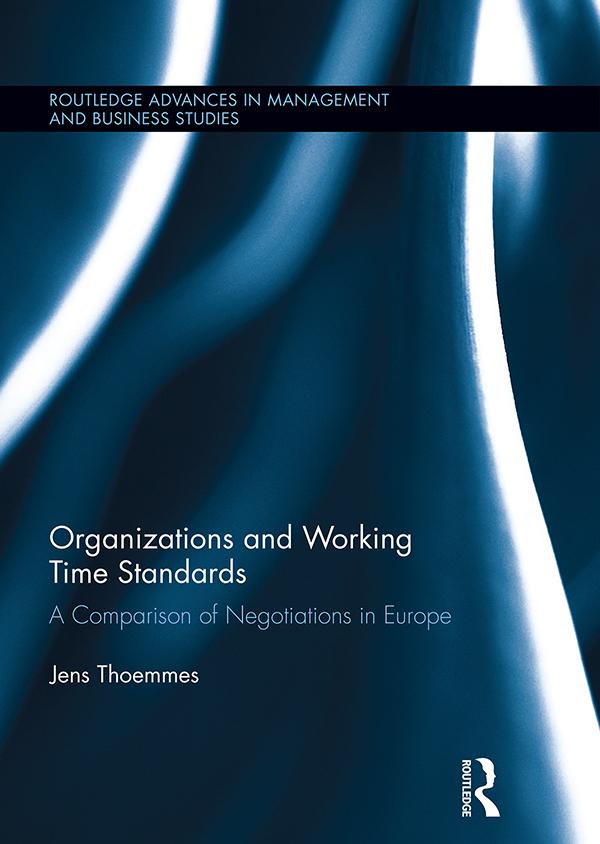
Collective bargaining between employers and trade unions has profoundly changed working conditions in companies around the globe. But why do we start work at the age of 10, 16, 18 or 24? Why do we work 6, 8, 10 or more hours a day? These questions are becoming increasingly pertinent as working norms are fractured and fragmented by country. This book brings an entirely new perspective to our understanding of changes in working time. In both the UK and the US, effective legal or collectively-bargained regulation of working time has been limited over the last 20 years, to the extent that its disappearance is seen as almost unproblematic. Here author Jens Thoemmes sheds light on this transition and its economic implications with a fully evidenced sociological account, based particularly on original research into cases of working time standards in France and Germany.
This book addresses the whole process of working time regulation over the last twenty years, evaluating the activities of trade unions, employers, and the State. While theories of industrial relations have already addressed the issue of markets in the context of collective bargaining, this book draws connections between time and markets, places these transitions in their historical contexts, and illustrates the importance of this movement crossing borders and cultures.
Pay easily by card, Klarna, Apple Pay or Google Pay. Not happy? You always have a 14-day money-back guarantee. Read more in our terms. If you have any questions, email us at hello@memmo.org.
Memmo makes studying easier – wherever you are in the world. We bring your course books and smart study tools together in one place: summaries, quizzes, podcasts and flashcards. Plus Ted, your study buddy who answers anything you wonder. Over 50,000 students already study here – built to help you learn faster and stress less.