
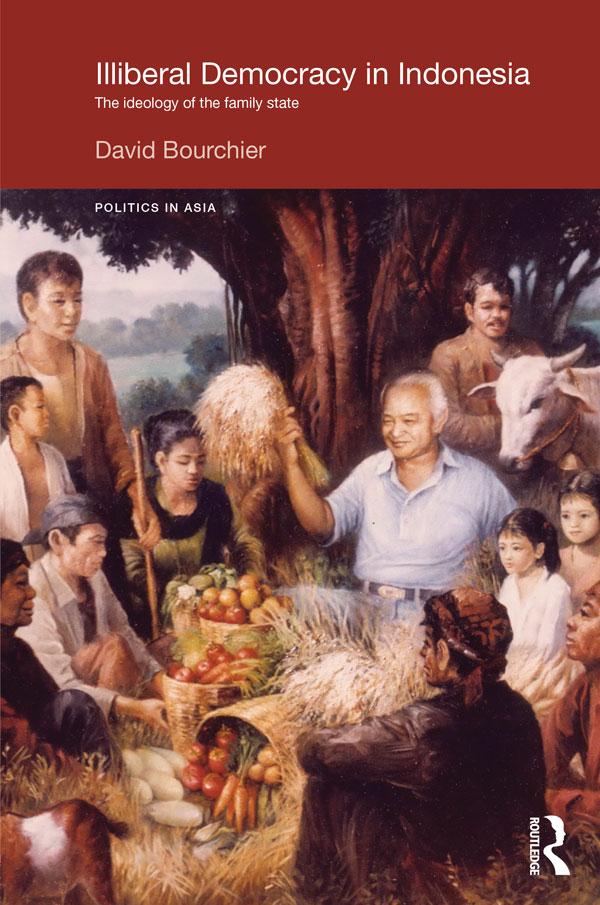
Illiberal Democracy in Indonesia charts the origins and development of organicist ideologies in Indonesia from the early 20th century to the present. In doing so, it provides a background to the theories and ideology that informed organicist thought, traces key themes in Indonesian history, examines the Soeharto regime and his ‘New Order’ in detail, and looks at contemporary Indonesia to question the possibility of past ideologies making a resurgence in the country.
Beginning with an exploration of the origins of the theory of the organic state in Europe, this book explores how this influenced many young Indonesian scholars and ‘secular’ nationalists. It also looks in detail at the case of Japan, and identifies the parallels between the process by which Japanese and Indonesian nationalist scholars drew on European romantic organicist ideas to forge ‘anti-Western’ national identities and ideologies. The book then turns to Indonesia’s tumultuous history from the revolution to 1965, the rise of Soeharto, and how his regime used organicist ideology, together with law and terror, to shape the political landscape consolidate control. In turn, it shows how the social and economic changes wrought by the government’s policies, such as the rise of a cosmopolitan middle class and a rapidly growing urban proletariat led to the failure of the corporatist political infrastructure and the eventual collapse of the New Order in 1998. Finally, the epilogue surveys the post Soeharto years to 2014, and how growing disquiet about the inability of the government to contain religious intolerance, violence and corruption, has led to an increased readiness to re-embrace not only more authoritarian styles of rule but also ideological formulas from the past.
This book will be welcomed by students and scholars of Southeast Asia, politics and political theory, as well as by those interested in authoritarian regimes, democracy and human rights.
Pay easily by card, Klarna, Apple Pay or Google Pay. Not happy? You always have a 14-day money-back guarantee. Read more in our terms. If you have any questions, email us at hello@memmo.org.
Memmo makes studying easier – wherever you are in the world. We bring your course books and smart study tools together in one place: summaries, quizzes, podcasts and flashcards. Plus Ted, your study buddy who answers anything you wonder. Over 50,000 students already study here – built to help you learn faster and stress less.