
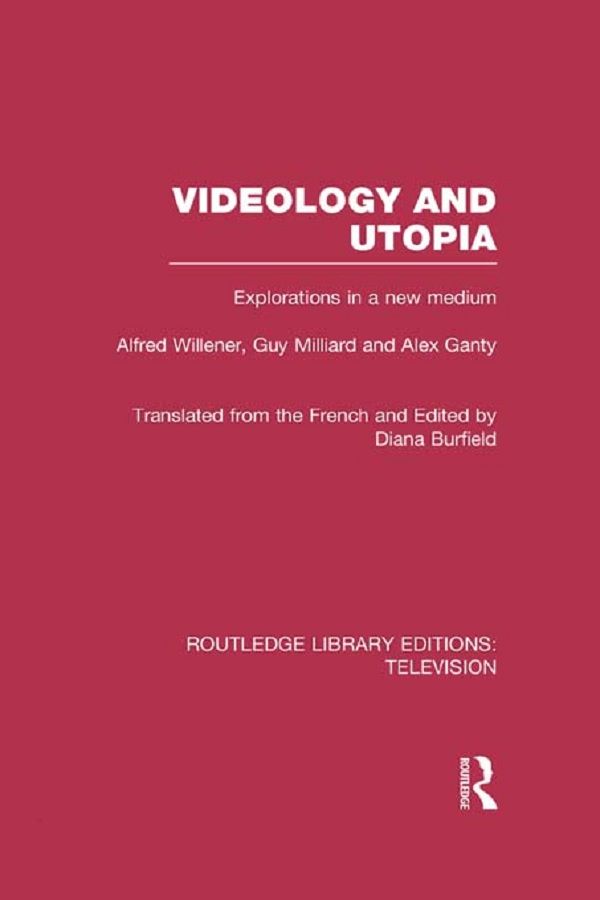
When this book was originally published in 1976, video represented a new instrument, a new medium, and a new field of research with largely unrealized potential. The video-taperecorder was an addition to the technology of mass communications, a handy gadget for recording synchronized images and sound on magnetic tapes for storage or simultaneous playback. But the authors of this study look at it as also mirror, relay and catalyst, offering creative possibilities of exploration and criticism, of active analysis and transformation, of self-discovery and communication. They discern a liberating potential of video an antidote to the dominance of centralized TV in consumer society and ultimately a means towards the progressive social reappropriation of the media of communication.
The authors draw on their experience working with school-children, teenagers, and a variety of cultural, political and community groups to illustrate the versatility of video in approaching diverse situations of everyday life, whether from the viewpoint of ‘cultural animation’, sociological research, or a surrealistic game. These projects, and interviews with other practitioners, present here the basis for a first typology of styles and approaches in using video, and for a ‘videology’: a language, a set of concepts, and a theory comprehending process and praxis, image and action. This is a fascinating snapshot now, looking back at these early ideas.
Pay easily by card, Klarna, Apple Pay or Google Pay. Not happy? You always have a 14-day money-back guarantee. Read more in our terms. If you have any questions, email us at hello@memmo.org.
Memmo makes studying easier – wherever you are in the world. We bring your course books and smart study tools together in one place: summaries, quizzes, podcasts and flashcards. Plus Ted, your study buddy who answers anything you wonder. Over 50,000 students already study here – built to help you learn faster and stress less.