
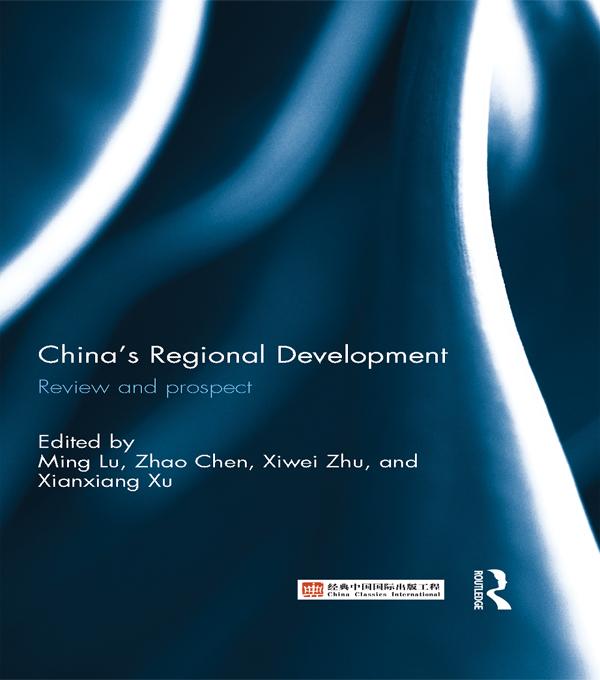
China is a large developing economy and it has been deeply involved in globalization since its economic reform and opening-up. Simultaneously, China has seen a significant change in the spatial distribution of economic resources, especially capital and labor. In the recent 10 years, economists have made significant progress in both theoretical and empirical studies on related topics.
The book provides an overview on the existing literature and current policy debates on what we have known and what we have misunderstood. This book includes an analytical framework of the New Economic Geography (NEG) with political economy to help us understand China’s regional development issues. The book of 10 chapters is organized into four thematic sections. The first section is a theoretical discussion on the relationship between economic agglomeration and interregional balanced development. The second section is a political economy analysis on regional and urban-rural development. The third section provides a summary on empirical literatures concerning from market segmentation and institutional barriers to production factor mobility. The final section consists of four empirical chapters on the relationship between agglomeration and balance, which is the core of relevant policy debates.
The book argues that for China to achieve both efficiency and balance for regional development, China may need to reform its systems which constrain production factors mobility. This book is a valuable reference for readers who are interested in spatial economics and the Chinese economy, especially its regional and urban development.
Pay easily by card, Klarna, Apple Pay or Google Pay. Not happy? You always have a 14-day money-back guarantee. Read more in our terms. If you have any questions, email us at hello@memmo.org.
Memmo makes studying easier – wherever you are in the world. We bring your course books and smart study tools together in one place: summaries, quizzes, podcasts and flashcards. Plus Ted, your study buddy who answers anything you wonder. Over 50,000 students already study here – built to help you learn faster and stress less.