
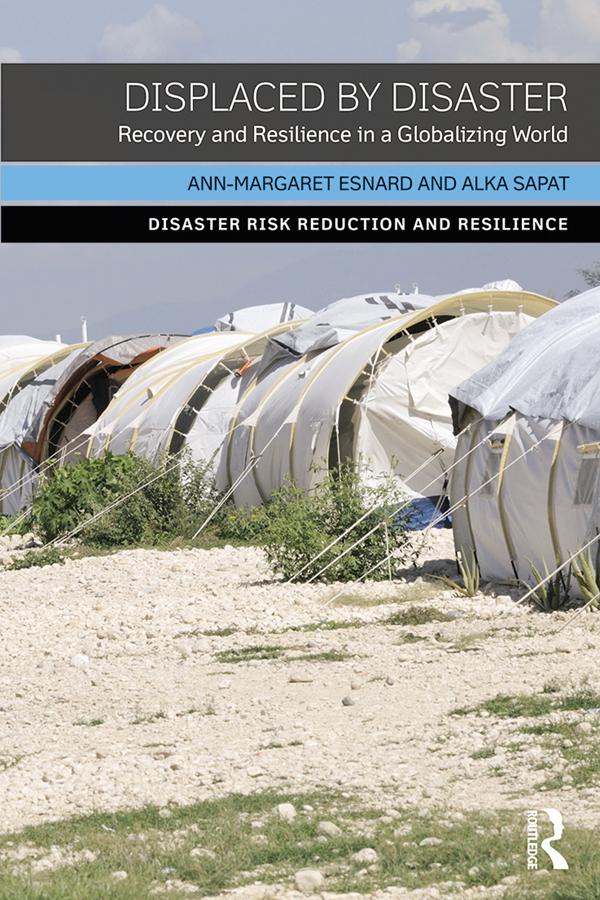
Displacement has traditionally been conceptualized as a phenomenon that results from conflict or other disruptions in developing or unstable countries. Hurricane Katrina shattered this notion and highlighted the various dilemmas of population displacement in the United States. The dilemmas stem from that of inconsistent terminology and definitions; lack of efforts to quantify displacement risk potential and that factor displacement vulnerability into community plans; lack of understanding of differential needs of "displacees" especially during long-term recovery periods; and policy and institutional responses (or lack thereof) especially as it relates to post-disaster sheltering and housing.
Incorporating relevant examples, cases, and policies Esnard and Sapat look at the experience of other countries and how the international community has dealt with hundreds of thousands of individuals who have been forced to leave their homes. Displaced by Disaster addresses such issues from a planning and policy perspective informed by scholarship in disciplines such as emergency management; political science; sociology and anthropology. It is ideal for students and practitioners working in the areas of disaster management, planning, public administration and policy, housing, and the many disciplines connected to disaster issues.
Pay easily by card, Klarna, Apple Pay or Google Pay. Not happy? You always have a 14-day money-back guarantee. Read more in our terms. If you have any questions, email us at hello@memmo.org.
Memmo makes studying easier – wherever you are in the world. We bring your course books and smart study tools together in one place: summaries, quizzes, podcasts and flashcards. Plus Ted, your study buddy who answers anything you wonder. Over 75,000 students already study here – built to help you learn faster and stress less.