
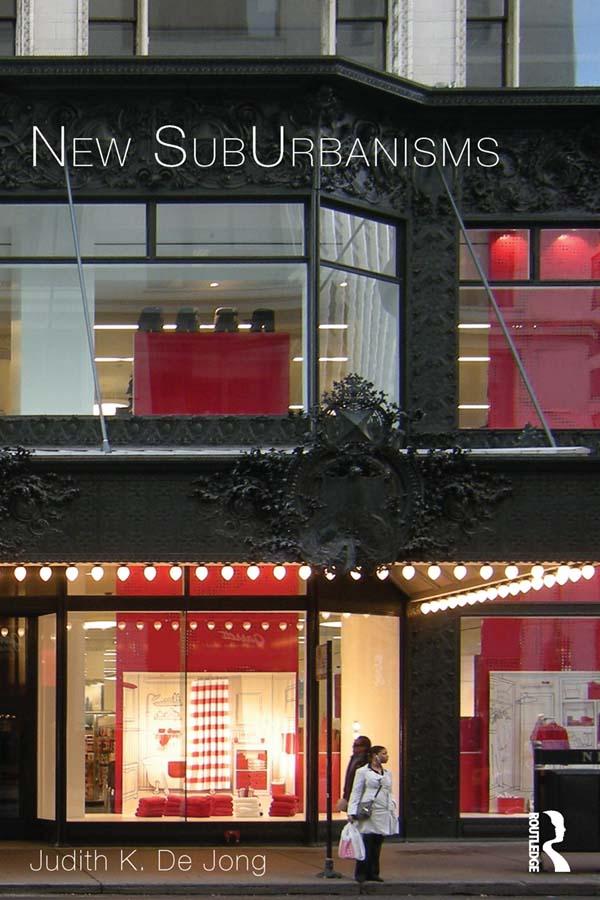
Historically, we see the city as the cramped, crumbling core of development and culture, and the suburb as the vast outlying wasteland – convenient, but vacant. Contemporary urban design proves this wrong. In New SubUrbanisms, Judith De Jong explains the on-going "flattening" of the American Metropolis, as suburbs are becoming more like their central cities – and cities more like their suburbs through significant changes in spatial and formal practice as well as demographic and cultural changes. These revisionist practices are exemplified in the emergence of hybrid sub/urban conditions such as parking practices, the residential densification of suburbia, hyper-programmed public spaces and inner city big-box retail, among others.
Each of these hybridized conditions reflects to varying degrees the reciprocating influences of the urban and the suburban. Each also offers opportunities for innovation in new formal and spatial practices that re-configure conventional understandings of urban and suburban, and in new ways of forming the evolving American metropolis. Based on this new understanding, De Jong argues for the development of new ways of building the city. Aimed at students and practitioners of urban design and planning New SubUrbanisms attempts to re-frame the contemporary metropolis in a way that will generate more instrumental engagement – and ultimately, better design.
Pay easily by card, Klarna, Apple Pay or Google Pay. Not happy? You always have a 14-day money-back guarantee. Read more in our terms. If you have any questions, email us at hello@memmo.org.
Memmo makes studying easier – wherever you are in the world. We bring your course books and smart study tools together in one place: summaries, quizzes, podcasts and flashcards. Plus Ted, your study buddy who answers anything you wonder. Over 75,000 students already study here – built to help you learn faster and stress less.