
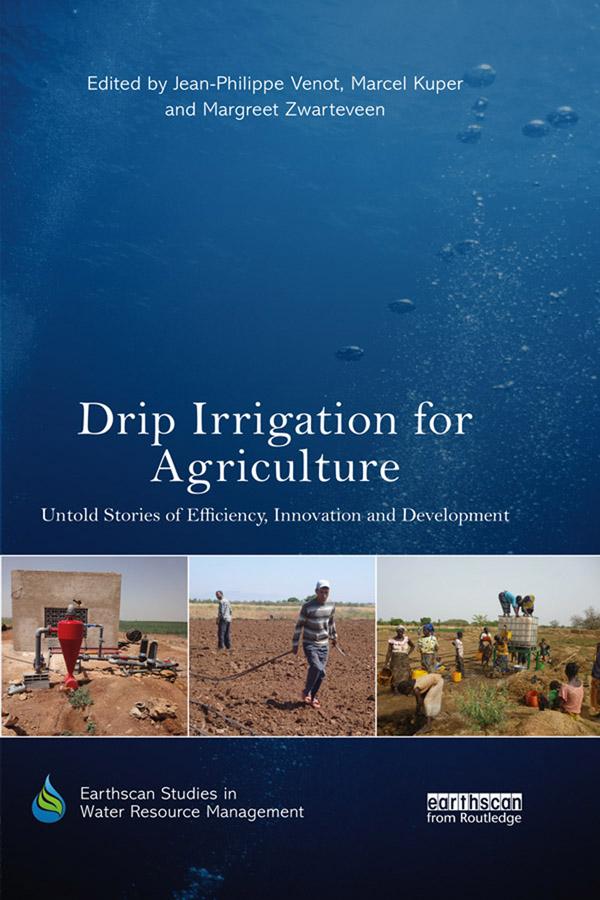
Initially associated with hi-tech irrigated agriculture, drip irrigation is now being used by a much wider range of farmers in emerging and developing countries. This book documents the enthusiasm, spread and use of drip irrigation systems by smallholders but also some disappointments and disillusion faced in the global South. It explores and explains under which conditions it works, for whom and with what effects. The book deals with drip irrigation 'behind the scenes', showcasing what largely remain 'untold stories'.
Most research on drip irrigation use plot-level studies to demonstrate the technology’s ability to save water or improve efficiencies and use a narrow and rather prescriptive engineering or economic language. They tend to be grounded in a firm belief in the technology and focus on the identification of ways to improve or better realize its potential. The technology also figures prominently in poverty alleviation or agricultural modernization narratives, figuring as a tool to help smallholders become more innovative, entrepreneurial and business minded. Instead of focusing on its potential, this book looks at drip irrigation-in-use, making sense of what it does from the perspectives of the farmers who use it, and of the development workers and agencies, policymakers, private companies, local craftsmen, engineers, extension agents or researchers who engage with it for a diversity of reasons and to realize a multiplicity of objectives. While anchored in a sound engineering understanding of the design and operating principles of the technology, the book extends the analysis beyond engineering and hydraulics to understand drip irrigation as a sociotechnical phenomenon that not only changes the way water is supplied to crops but also transforms agricultural farming systems and even how society is organized. The book provides field evidence from a diversity of interdisciplinary case studies in sub-Saharan Africa, the Mediterranean, Latin America, and South Asia, thus revealing some of the untold stories of drip irrigation.
Pay easily by card, Klarna, Apple Pay or Google Pay. Not happy? You always have a 14-day money-back guarantee. Read more in our terms. If you have any questions, email us at hello@memmo.org.
Memmo makes studying easier – wherever you are in the world. We bring your course books and smart study tools together in one place: summaries, quizzes, podcasts and flashcards. Plus Ted, your study buddy who answers anything you wonder. Over 50,000 students already study here – built to help you learn faster and stress less.