
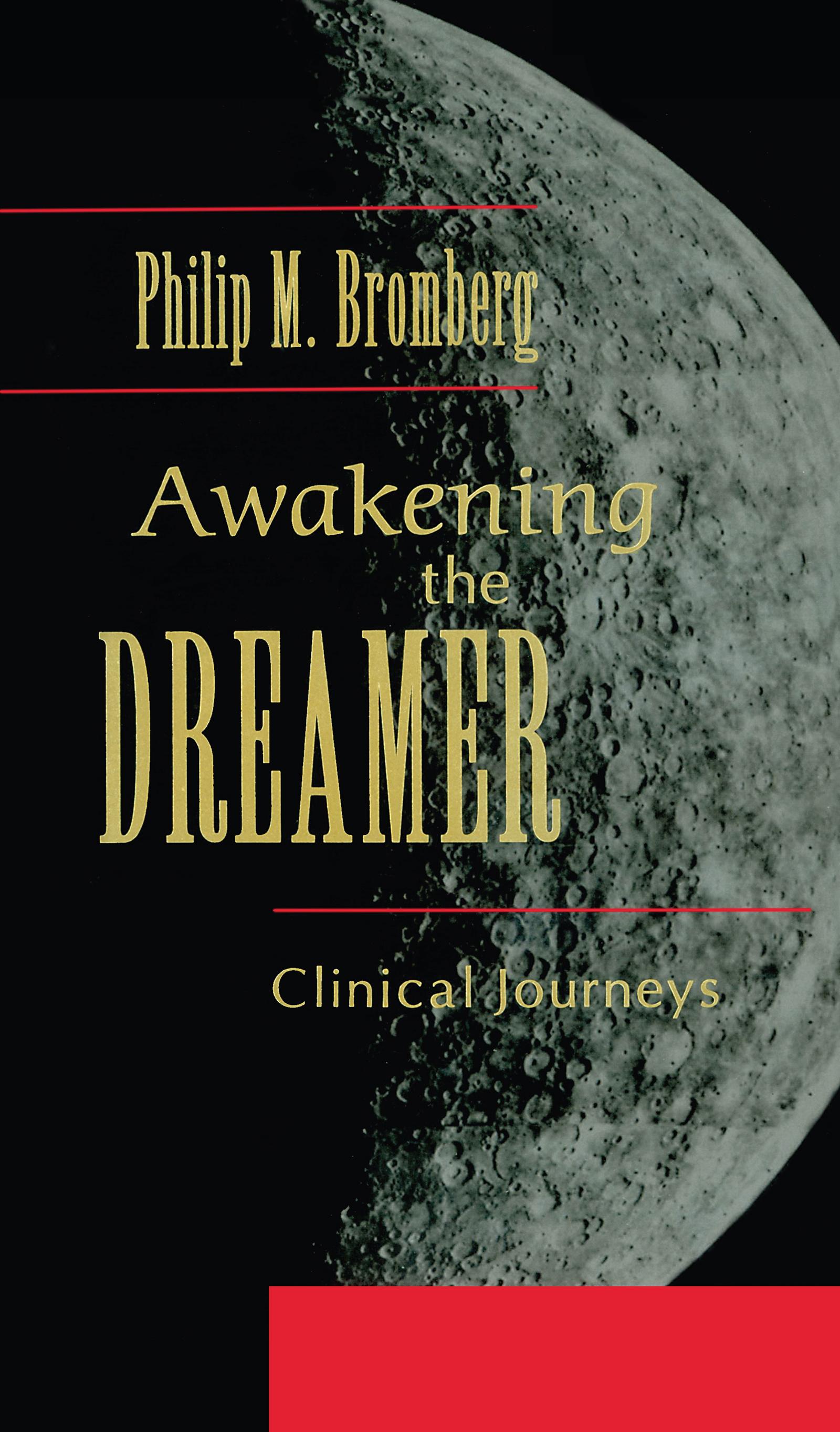
In Awakening the Dreamer: Clinical Journeys, Philip Bromberg continues the illuminating explorations into dissociation and clinical process begun in Standing in the Spaces (1998). Bromberg is among our most gifted clinical writers, especially in his unique ability to record peripheral variations in relatedness - those subtle, split-second changes that capture the powerful workings of dissociation and chart the changing self-states that analyst and patient bring to the moment.
For Bromberg, a model of mind premised on the centrality of self-states and dissociation not only offers the optimal lens for comprehending and interpreting clinical data; it also provides maximum leverage for achieving true intersubjective relatedness. And this manner of looking at clinical data offers the best vantage point for integrating psychoanalytic experience with the burgeoning findings of contemporary neuroscience, cognitive and developmental psychology, and attachment research.
Dreams are approached not as texts in need of deciphering but as means of contacting genuine but not yet fully conscious self-states. From here, he explores how the patient's "dreamer" and the analyst's "dreamer" can come together to turn the "real" into the "really real" of mutative therapeutic dialogue. The "difficult," frequently traumatized patient is newly appraised in terms of tensions within the therapeutic dyad. And then there is the "haunted" patient who carries a sense of preordained doom through years of otherwise productive work - until the analyst can finally feel the patient's doom as his or her own.
Laced with Bromberg's characteristic honesty, humor, and thoughtfulness, these essays elegantly attest to the mind's reliance on dissociation, in both normal and pathological variants, in the ongoing effort to maintain self-organization. Awakening the Dreamer, no less than Standing in the Spaces, is destined to become a permanent part of the literature on therapeutic process and change.
Pay easily by card, Klarna, Apple Pay or Google Pay. Not happy? You always have a 14-day money-back guarantee. Read more in our terms. If you have any questions, email us at hello@memmo.org.
Memmo makes studying easier – wherever you are in the world. We bring your course books and smart study tools together in one place: summaries, quizzes, podcasts and flashcards. Plus Ted, your study buddy who answers anything you wonder. Over 50,000 students already study here – built to help you learn faster and stress less.