
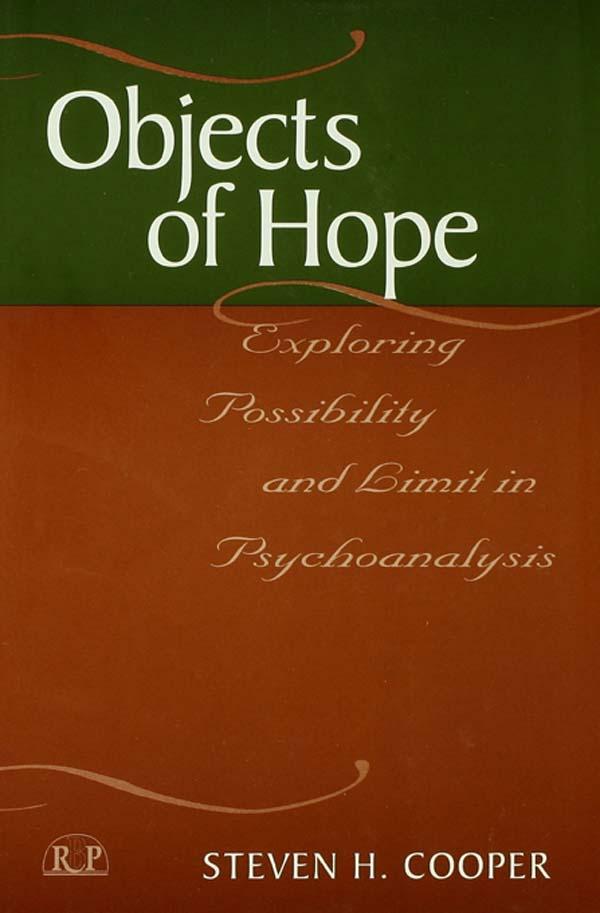
Despite the importance of the concept of hope in human affairs, psychoanalysts have long had difficulty accepting responsibility for the manner in which their various interpretive orientations and explanations of therapeutic action express their own hopes for their patients. In Objects of Hope: Exploring Possibility and Limit in Psychoanalysis, Steven Cooper remedies this longstanding lacuna in the literature, and, in the process, provides a thorough comparative analysis of contemporary psychoanalytic models with respect to issues of hope and hopefulness.
Cooper's task is challenging, given that the most hopeful aspects of human growth frequently entail acceptance of the destructive elements of our inner lives. The analysis of hope, then, implicates what Cooper sees as a central dialectic tension in psychoanalysis: that between psychic possibility and psychic limit. He argues that analysts have historically had difficulty integrating the concept of limit into a treatment modality so dedicated to the creation and augmentation of psychic possibility. And yet, it is only by accepting the realm of limit as a necessary counterpoise to the realm of possibility and clinically embracing the tension between the two realms that analysts can further their understanding of therapeutic process in the interest of better treatment outcomes.
Cooper persuasively demonstrates how each psychoanalytic theory provides its own logic of hope; this logic, in turn, translates into a distinctive sense of what the analyst may hope for the patient, and what the patient is encouraged to hope for himself or herself. Objects of Hope brings ranging scholarship and refreshing candor to bear on the knotty issue of what can and cannot be achieved in the course of psychoanalytic therapy. It will be valued not only as an exemplary exercise in comparative psychoanalysis, but also as a thoughtful, original effort to place the vital issue of hope at the center of clinical concern.
Pay easily by card, Klarna, Apple Pay or Google Pay. Not happy? You always have a 14-day money-back guarantee. Read more in our terms. If you have any questions, email us at hello@memmo.org.
Memmo makes studying easier – wherever you are in the world. We bring your course books and smart study tools together in one place: summaries, quizzes, podcasts and flashcards. Plus Ted, your study buddy who answers anything you wonder. Over 50,000 students already study here – built to help you learn faster and stress less.