
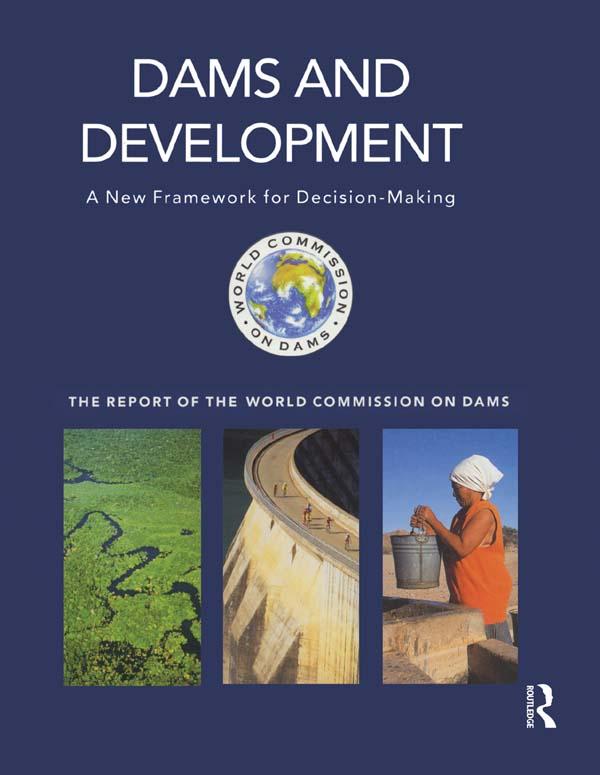
By the year 2000, the world had built more than 45,000 large dams to irrigate crops, generate power, control floods in wet times and store water in dry times. Yet, in the last century, large dams also disrupted the ecology of half the world's rivers, displaced tens of millions of people from their homes and left nations burdened with debt. Their impacts have inevitably generated growing controversy and conflicts. Resolving their role in meeting water and energy needs is vital for the future and illustrates the complex development challenges that face our societies.
The Report of the World Commission on Dams:
- is the product of an unprecedented global public policy effort to bring governments, the private sector and civil society together in one process
- provides the first comprehensive global and independent review of the performance and impacts of dams
- presents a new framework for water and energy resources development
- develops an agenda of seven strategic priorities with corresponding criteria and guidelines for future decision-making.
Challenging our assumptions, the Commission sets before us the hard, rigorous and clear-eyed evidence of exactly why nations decide to build dams and how dams can affect human, plant and animal life, for better or for worse. Dams and Development: A New Framework for Decision-Making is vital reading on the future of dams as well as the changing development context where new voices, choices and options leave little room for a business-as-usual scenario.
Pay easily by card, Klarna, Apple Pay or Google Pay. Not happy? You always have a 14-day money-back guarantee. Read more in our terms. If you have any questions, email us at hello@memmo.org.
Memmo makes studying easier – wherever you are in the world. We bring your course books and smart study tools together in one place: summaries, quizzes, podcasts and flashcards. Plus Ted, your study buddy who answers anything you wonder. Over 50,000 students already study here – built to help you learn faster and stress less.