
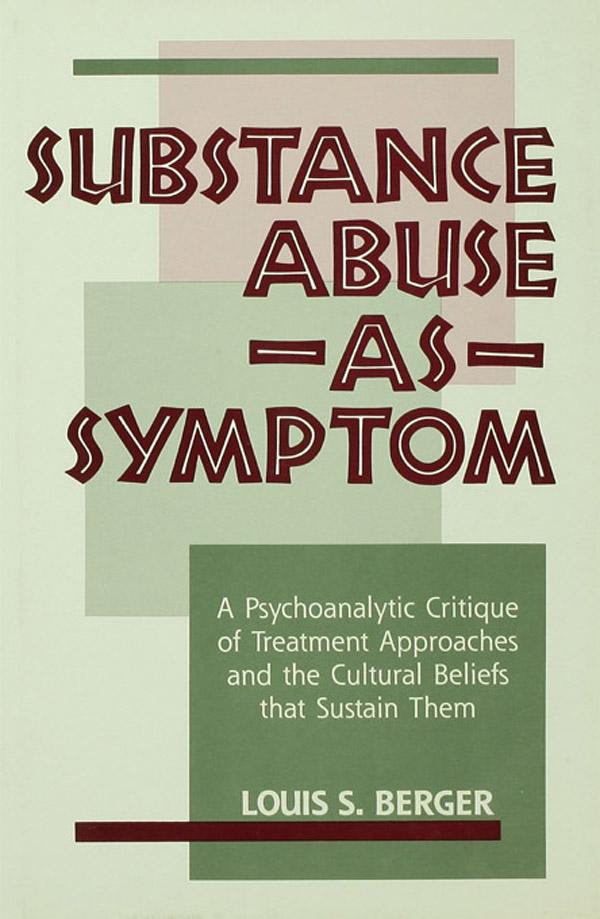
What can psychoanalysis contribute to an understanding of the etiology, treatment, and prevention of substance abuse? Here, Louis Berger contests both the orthodox view of substance abuse as a "disease" explicable within the medical model, and the fashionable dissenting view that substance abuse is a habit controllable through the "willpower" fostered by superficial treatment approaches.
According to Berger, substance abuse is first and foremost a symptom. He argues that it is only by grasping this fact that we can understand why standard approaches to treatment and prevention have failed. Berger invokes a wide spectrum of recent analytic insights about infant and child development, the psychology of narcissism, and primitive character disorders in making the case that substance abuse masks serious preoedipal (or "midrange") psychopathology. Such psychopathology, operating at both cultural and person levels, explains why certain individuals become dependent on illicit drugs; it is equally revelatory of why the substance abuse "establishment" -- and society at large -- continues to misconstrue the nature of the problem and to proffer ill-conceived and ineffective remedies.
After thoroughly examining the motives, conscious and unconscious, that maintain "mainstream" myths about substance abuse, Berger points the way to alternative approaches to prevention and treatment.
Pay easily by card, Klarna, Apple Pay or Google Pay. Not happy? You always have a 14-day money-back guarantee. Read more in our terms. If you have any questions, email us at hello@memmo.org.
Memmo makes studying easier – wherever you are in the world. We bring your course books and smart study tools together in one place: summaries, quizzes, podcasts and flashcards. Plus Ted, your study buddy who answers anything you wonder. Over 50,000 students already study here – built to help you learn faster and stress less.