
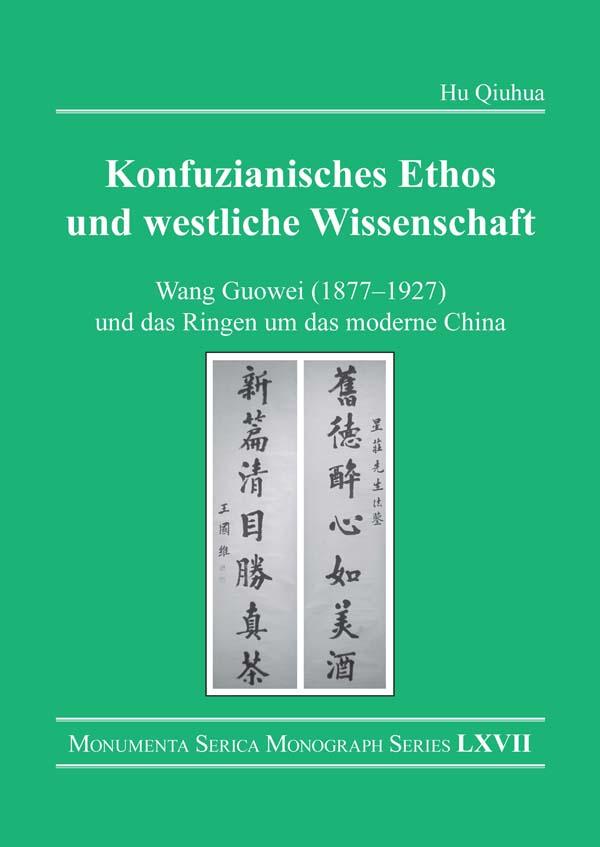
This study in German offers profound insights into the life and thoughts of Wang Guowei (1877-1927). Like many intellectuals who strongly perceived the necessity of reforms in the waning years of the Late Qing dynasty, i.e. after the Opium wars, Wang sought to strengthen China's position against foreign, in particular Western, powers. Contrary to earlier approaches, which either advocated a close adherence to Confucian traditions or tried to adapt only elements of Western material culture, mainly industrial and military technology, Wang Guowei aimed at reviving traditional Chinese culture by analysing its source texts using a modern scientific approach (and thereby started the discipline of guoxue [national studies]) and simultaneously adapting compatible elements of Western immaterial culture. Thus, Wang became known as an authority on Chinese paleography as well as on German philosophy, especially Kantian epistomology.
Pay easily by card, Klarna, Apple Pay or Google Pay. Not happy? You always have a 14-day money-back guarantee. Read more in our terms. If you have any questions, email us at hello@memmo.org.
Memmo makes studying easier – wherever you are in the world. We bring your course books and smart study tools together in one place: summaries, quizzes, podcasts and flashcards. Plus Ted, your study buddy who answers anything you wonder. Over 50,000 students already study here – built to help you learn faster and stress less.
You might also like
Buy the book0