
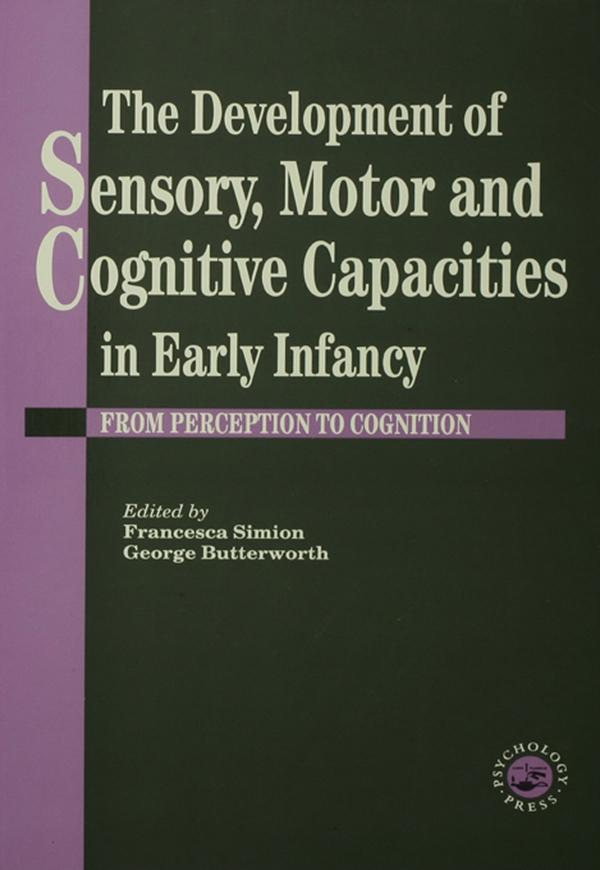
Research on the development of human infants has revealed remarkable capacities in recent years. Instead of stressing the limitations of the newborn, the modern approach is now more optimistically based on an assessment of the adaptive capabilities of the infant. Innate endowment, coupled with interaction with the physical and social environment, enables a developmental transition from processes deeply rooted in early perception and action to the cognitive and language abilities typical of the toddler.; This book reviews a number of issues in early human development. It includes a reconceptualization of the role of perception at the origins of development, a reconciliation of psychophysical and ecological approaches to early face perception, and building bridges between biological and psychological aspects of development in terms of brain structure and function. Topics covered include basic exploratory processes of early visual systems in early perception and action; face perception in newborns, species typical aspects of human communication, imitation, perception of the phonetic structure of speech, origins of the pointing gesture, handedness origins and development, theoretical contributions on perception and cognition, implicit and explicit knowledge in babies; sensory-motor coordination and cognition, information processing and cognition, perception, habituation and the development of intelligence from infancy.
Pay easily by card, Klarna, Apple Pay or Google Pay. Not happy? You always have a 14-day money-back guarantee. Read more in our terms. If you have any questions, email us at hello@memmo.org.
Memmo makes studying easier – wherever you are in the world. We bring your course books and smart study tools together in one place: summaries, quizzes, podcasts and flashcards. Plus Ted, your study buddy who answers anything you wonder. Over 50,000 students already study here – built to help you learn faster and stress less.
You might also like
Buy the book0