
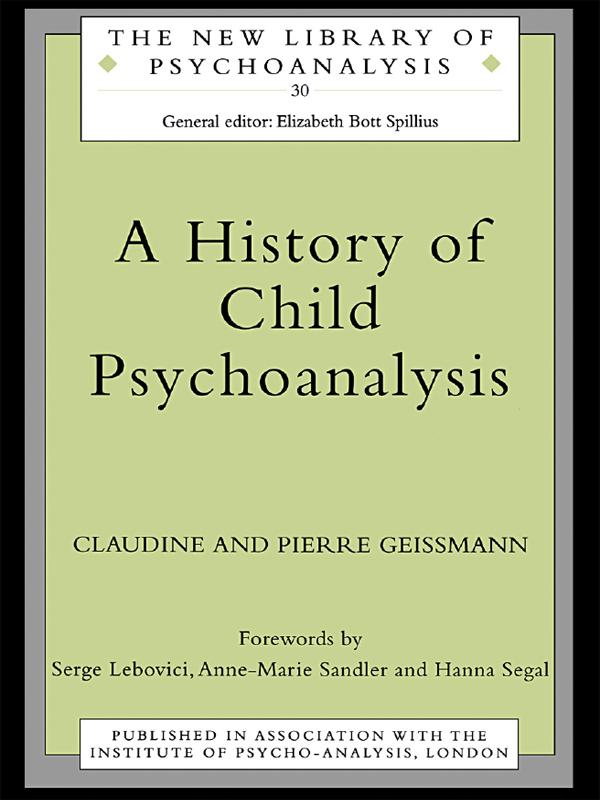
Child analysis has occupied a special place in the history of psychoanalysis because of the challenges it poses to practitioners and the clashes it has provoked among its advocates. Since the early days in Vienna under Sigmund Freud child psychoanalysts have tried to comprehend and make comprehensible to others the psychosomatic troubles of childhood and to adapt clinical and therapeutic approaches to all the stages of development of the baby, the child, the adolescent and the young adult.
Claudine and Pierre Geissmann trace the history and development of child analysis over the last century and assess the contributions made by pioneers of the discipline, whose efforts to expand its theoretical foundations led to conflict between schools of thought, most notably to the rift between Anna Freud and Melanie Klein.
Now taught and practised widely in Europe, the USA and South America, child and adolescent psychoanalysis is unique in the insight it gives into the psychological aspects of child development, and in the therapeutic benefits it can bring both to the child and its family.
Pay easily by card, Klarna, Apple Pay or Google Pay. Not happy? You always have a 14-day money-back guarantee. Read more in our terms. If you have any questions, email us at hello@memmo.org.
Memmo makes studying easier – wherever you are in the world. We bring your course books and smart study tools together in one place: summaries, quizzes, podcasts and flashcards. Plus Ted, your study buddy who answers anything you wonder. Over 50,000 students already study here – built to help you learn faster and stress less.