
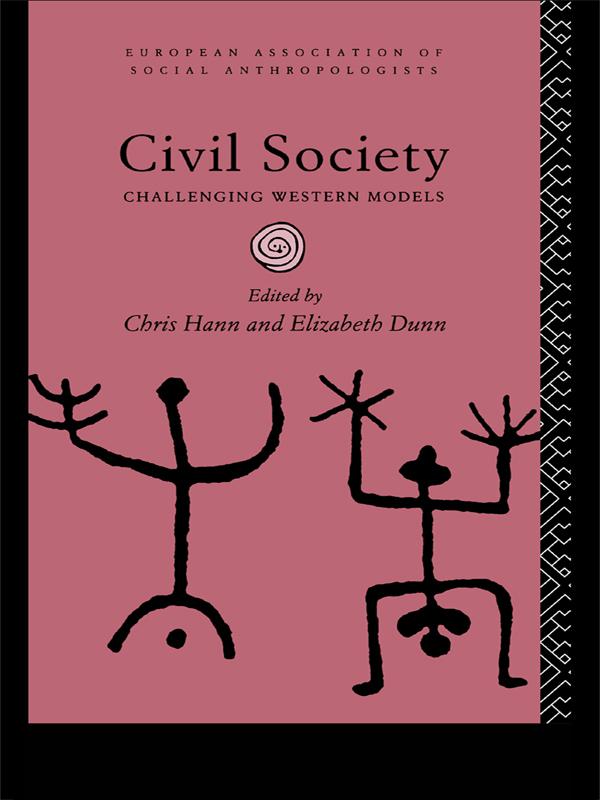
Between kinship ties on the one hand and the state on the other, human beings experience a diversity of social relationships and groupings which in modern western thought have come to be gathered under the label 'civil society'. A liberal-individualist model of civil society has become fashionable in recent years, but what can such a term mean in the late twentieth century?
Civil Society argues that civil society should not be studied as a separate, 'private' realm clearly separated in opposition to the state; nor should it be confined to the institutions of the 'voluntary' or 'non-governmental' sector. A broader understanding of civil society involves the investigation of everyday social practices, often elusive power relations and the shared moralities that hold communities together. By drawing on case materials from a range of contemporary societies, including the US, Britain, four of the former Communist countries of Eastern Europe, Turkey and the Middle and Far East, Civil Society demonstrates what anthropology contributes to debates taking place throughout the social sciences; adding up to an exciting renewal of the agenda for political anthropology.
Pay easily by card, Klarna, Apple Pay or Google Pay. Not happy? You always have a 14-day money-back guarantee. Read more in our terms. If you have any questions, email us at hello@memmo.org.
Memmo makes studying easier – wherever you are in the world. We bring your course books and smart study tools together in one place: summaries, quizzes, podcasts and flashcards. Plus Ted, your study buddy who answers anything you wonder. Over 50,000 students already study here – built to help you learn faster and stress less.