
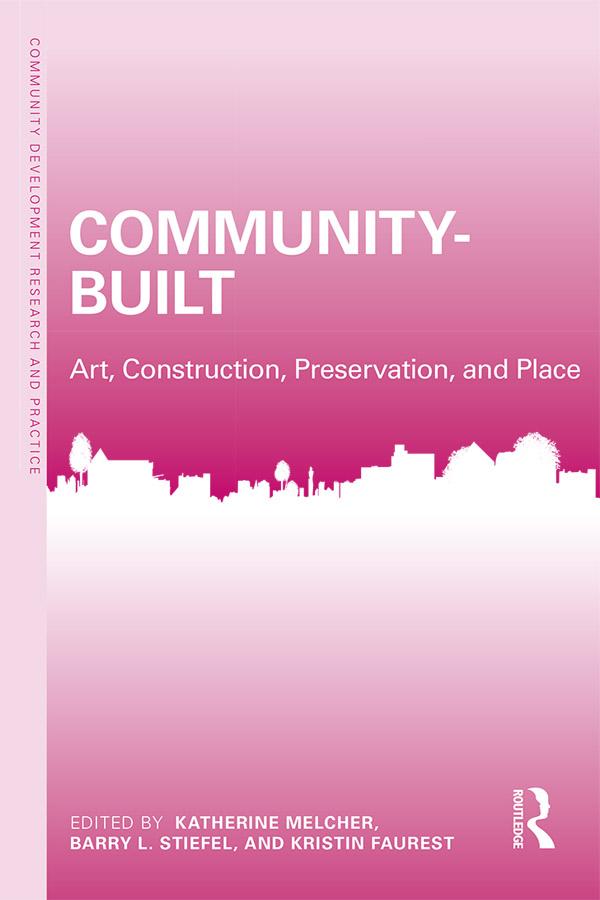
Throughout history and around the world, community members have come together to build places, be it settlers constructing log cabins in nineteenth-century Canada, an artist group creating a waterfront gathering place along the Danube in Budapest, or residents helping revive small-town main streets in the United States. What all these projects have in common is that they involve local volunteers in the construction of public and community places; they are community-built.
Although much attention has been given to specific community-built movements such as public murals and community gardens, little has been given to defining community-built as a whole. This volume provides a preliminary description of community-built practices with examples from the disciplines of urban design, historic preservation, and community art.
Taken as a whole, these community-built projects illustrate how the process of local involvement in adapting, building, and preserving a built environment can strengthen communities and create places that are intimately tied to local needs, culture, and community. The lessons learned from this volume can provide community planners, grassroots facilitators, and participants with an understanding of what can lead to successful community-built art, construction, preservation, and placemaking.
Pay easily by card, Klarna, Apple Pay or Google Pay. Not happy? You always have a 14-day money-back guarantee. Read more in our terms. If you have any questions, email us at hello@memmo.org.
Memmo makes studying easier – wherever you are in the world. We bring your course books and smart study tools together in one place: summaries, quizzes, podcasts and flashcards. Plus Ted, your study buddy who answers anything you wonder. Over 75,000 students already study here – built to help you learn faster and stress less.