
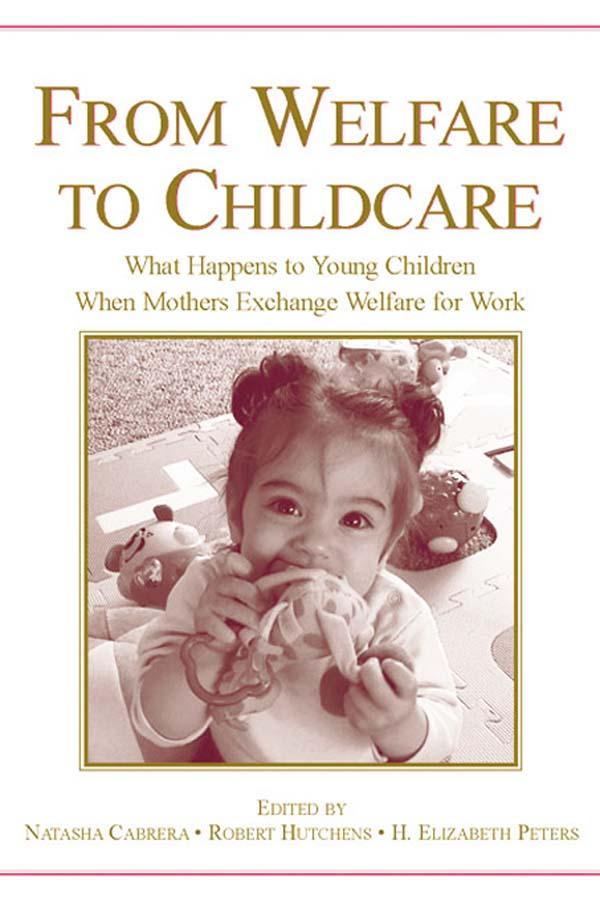
Although federal and state support for childcare has increased dramatically in response to welfare work requirements, low-income families are still facing difficulties balancing work and family obligations. There is wide variation across states in the strictness of welfare work requirements and in the generosity of childcare support. In addition, the level of co-payments required and the flexibility to use subsidies for informal modes of childcare differ across states, leading families to make different childcare and employment choices.
The purpose of From Welfare to Childcare is first to describe what changes occurred in childcare following the 1996 welfare reform legislation, and then to analyze how federal welfare and subsidy policies influence the availability, accessibility, and quality of childcare arrangements for single mothers with young children. National in scope, it focuses on how the reforms influence the way that children are cared for when their mothers leave welfare and enter the workforce.
This book is suitable for national, state, and local policymakers, non-profit organizations that study and attempt to influence public policy, and scholars interested in family and social policy issues. It can be used as a text in graduate level courses on welfare, poverty, and children and public policy.
Pay easily by card, Klarna, Apple Pay or Google Pay. Not happy? You always have a 14-day money-back guarantee. Read more in our terms. If you have any questions, email us at hello@memmo.org.
Memmo makes studying easier – wherever you are in the world. We bring your course books and smart study tools together in one place: summaries, quizzes, podcasts and flashcards. Plus Ted, your study buddy who answers anything you wonder. Over 50,000 students already study here – built to help you learn faster and stress less.