
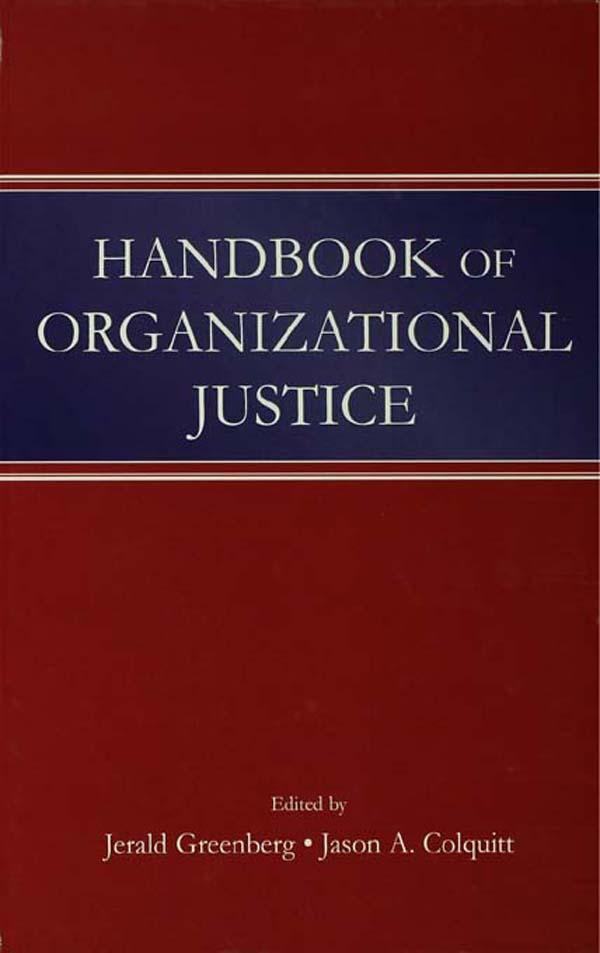
Matters of perceived fairness and justice run deep in the workplace. Workers are concerned about being treated fairly by their supervisors; managers generally are interested in treating their direct reports fairly; and everyone is concerned about what happens when these expectations are violated. This exciting new handbook covers the topic of organizational justice, defined as people's perceptions of fairness in organizations.
The Handbook of Organizational Justice is designed to be a complete, current, and comprehensive reference chronicling the current state of the organizational justice literature. Tracing the development of ideas regarding organizational justice, this book:
*introduces the topic of organizational justice from a historical perspective and presents fundamental issues regarding the nature of organizational justice;
*examines the justice judgment process, specifically addressing basic psychological processes, such as the roles of control, self-interest, morality, and trust in the formation of justice judgments;
*discusses the consequences of fair and unfair treatment in the workplace;
*focuses on such key issues as promoting justice in the workplace in ways that help manage stress, and the underlying processes that account for the effectiveness of justice applications;
*examines the generalizability of the interaction between process and outcomes and focuses on the notion of cross-cultural differences in justice effects; and
*summarizes the state of the science of organizational justice and presents various issues for future research and theorizing.
This Handbook is useful as a guide for professors and graduate students, primarily in the fields of management and psychology. It also is highly relevant to professionals in the fields of communication, sociology, legal studies, marketing, and human resources management.
Pay easily by card, Klarna, Apple Pay or Google Pay. Not happy? You always have a 14-day money-back guarantee. Read more in our terms. If you have any questions, email us at hello@memmo.org.
Memmo makes studying easier – wherever you are in the world. We bring your course books and smart study tools together in one place: summaries, quizzes, podcasts and flashcards. Plus Ted, your study buddy who answers anything you wonder. Over 50,000 students already study here – built to help you learn faster and stress less.