
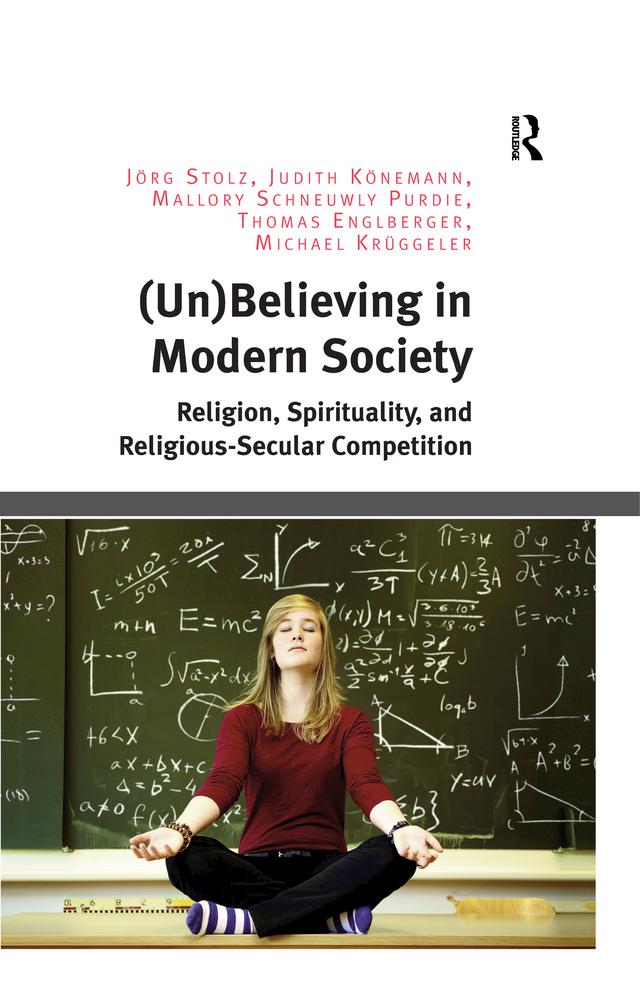
This landmark study in the sociology of religion sheds new light on the question of what has happened to religion and spirituality since the 1960s in modern societies. Exposing several analytical weaknesses of today's sociology of religion, (Un)Believing in Modern Society presents a new theory of religious-secular competition and a new typology of ways of being religious/secular. The authors draw on a specific European society (Switzerland) as their test case, using both quantitative and qualitative methodologies to show how the theory can be applied. Identifying four ways of being religious/secular in a modern society: 'institutional', 'alternative', 'distanced' and 'secular' they show how and why these forms have emerged as a result of religious-secular competition and describe in what ways all four forms are adapted to the current, individualized society.
Pay easily by card, Klarna, Apple Pay or Google Pay. Not happy? You always have a 14-day money-back guarantee. Read more in our terms. If you have any questions, email us at hello@memmo.org.
Memmo makes studying easier – wherever you are in the world. We bring your course books and smart study tools together in one place: summaries, quizzes, podcasts and flashcards. Plus Ted, your study buddy who answers anything you wonder. Over 50,000 students already study here – built to help you learn faster and stress less.