
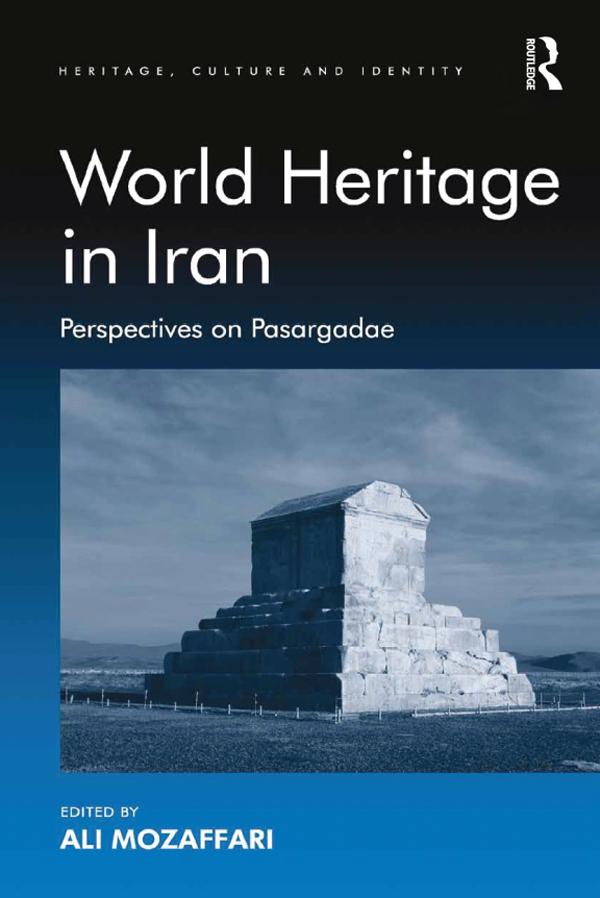
Pasargadae is the location of the tomb of Cyrus the Great, founder of the Achaemenid Empire. Through the ages it was Islamised and the tomb was ascribed to the Mother of Solomon. It was only at the beginning of the twentieth century that archaeological evidence demonstrated the relationship between the site and Cyrus and it was appropriated into conflicting political discourses on nationalism and Islamism while concurrently acknowledged as a national and then a World Heritages site. However, Pasargadae is neither an isolated World Heritage site, nor purely a symbol of abstract state politics. Pasargadae and its immediate vicinity constitute a living landscape occupied by villagers, nomads and tourists. This edited volume presents for the first time a broad, multi-disciplinary examination of Pasargadae by experts from both outside and within Iran. It specifically focuses on those disciplines that are absent from existing studies, such as ethnography, tourism and museum studies providing valuable insights into this fascinating place. In its totality, the book argues that to understand World Heritage sites and their problems fully, a holistic approach should be adopted, which considers the manifold of perspectives and issues. It also puts forward a novel approach to the question of heritage, representation and construction of collective identity from the framework of place.
Pay easily by card, Klarna, Apple Pay or Google Pay. Not happy? You always have a 14-day money-back guarantee. Read more in our terms. If you have any questions, email us at hello@memmo.org.
Memmo makes studying easier – wherever you are in the world. We bring your course books and smart study tools together in one place: summaries, quizzes, podcasts and flashcards. Plus Ted, your study buddy who answers anything you wonder. Over 75,000 students already study here – built to help you learn faster and stress less.
You might also like
Buy the book0