
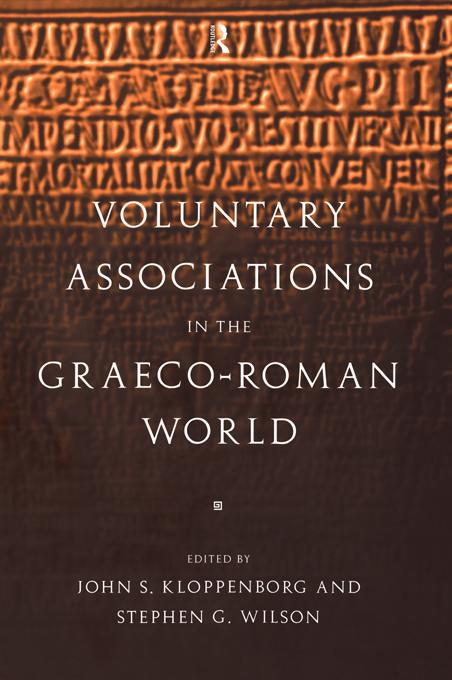
Based upon a series of detailed case studies of associations such as early synagogues and churches, philosophical schools and pagan mystery cults, this collection addresses the question of what can legitimately be termed a 'voluntary association'.
Employing modern sociological concepts, the essays show how the various associations were constituted, the extent of their membership, why people joined them and what they contributed to the social fabric of urban life. For many, those groups were the most significant feature of social life beyond family and work. All of them provided an outlet of religious as well as social commitments.
Also included are studies of the way in which early Jewish and Christian groups adopted and adapted the models of private association available to them and how this affected their social status and role. Finally, the situation of women is discussed, as some of the voluntary associations offered them a more significant recognition than they received in society at large.
Pay easily by card, Klarna, Apple Pay or Google Pay. Not happy? You always have a 14-day money-back guarantee. Read more in our terms. If you have any questions, email us at hello@memmo.org.
Memmo makes studying easier – wherever you are in the world. We bring your course books and smart study tools together in one place: summaries, quizzes, podcasts and flashcards. Plus Ted, your study buddy who answers anything you wonder. Over 75,000 students already study here – built to help you learn faster and stress less.
You might also like
Buy the book0