
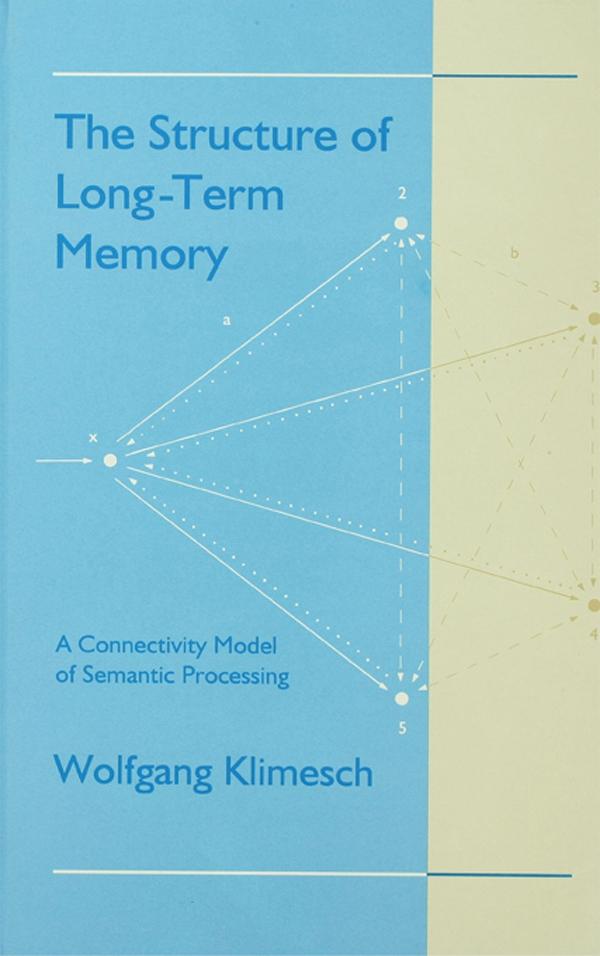
How is information stored and retrieved from long-term memory? It is argued that any systematic attempt to answer this question should be based on a particular set of specific representational assumptions that have led to the development of a new memory theory -- the connectivity model. One of the crucial predictions of this model is that, in sharp contrast to traditional theories, the speed of processing information increases as the amount and complexity of integrated knowledge increases. In this volume, the predictions of the model are examined by analyzing the results of a variety of different experiments and by studying the outcome of the simulation program CONN1, which illustrates the representation of complex semantic structures. In the final chapter, the representational assumptions of the connectivity model are evaluated on the basis of neuroanatomical and physiological evidence -- suggesting that neuroscience provides valuable knowledge which should guide the development of memory theories.
Pay easily by card, Klarna, Apple Pay or Google Pay. Not happy? You always have a 14-day money-back guarantee. Read more in our terms. If you have any questions, email us at hello@memmo.org.
Memmo makes studying easier – wherever you are in the world. We bring your course books and smart study tools together in one place: summaries, quizzes, podcasts and flashcards. Plus Ted, your study buddy who answers anything you wonder. Over 50,000 students already study here – built to help you learn faster and stress less.
You might also like
Buy the book0