
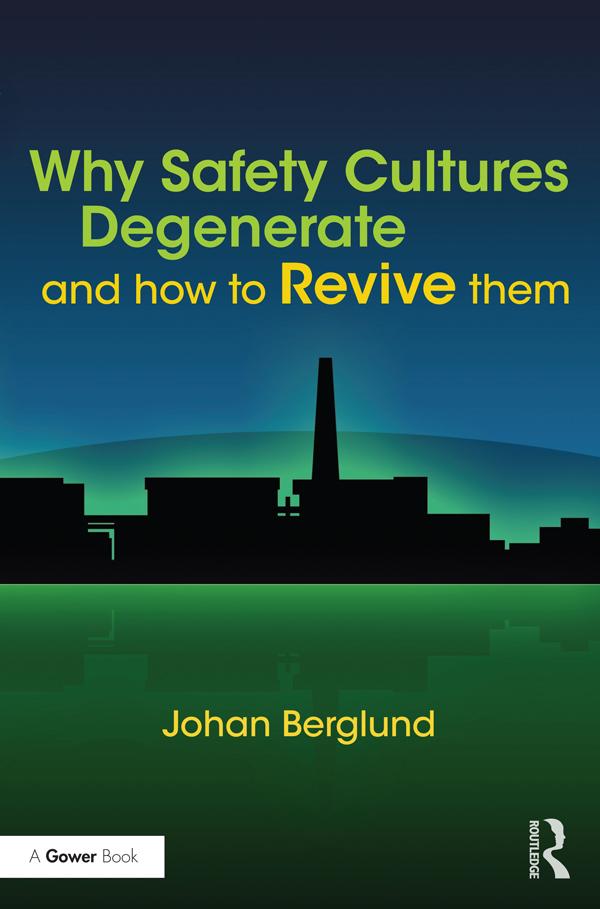
From Chernobyl to Fukushima, have we come full circle, where formalisation has replaced ambiguity and a decadent style of management, to the point where it is becoming counter-productive? Safety culture is a contested concept and a complex phenomenon, which has been much debated in recent years. In some high-risk activities, like the operating of nuclear power plants, transparency, traceability and standardisation have become synonymous with issues of quality. Meanwhile, the experience-based knowledge that forms the basis of manuals and instructions is liable to decline. In the long-term, arguably, it is the cultural changes and its adverse impacts on co-operation, skill and ability of judgement that will pose the greater risks to the safety of nuclear plants and other high-risk facilities. Johan Berglund examines the background leading up to the Fukushima Daiichi accident in 2011 and highlights the function of practical proficiency in the quality and safety of high-risk activities. The accumulation of skill represents a more indirect and long-term approach to quality, oriented not towards short-term gains but (towards) delayed gratification. Risk management and quality professionals and academics will be interested in the links between skill, quality and safety-critical work as well as those interested in a unique insight into Japanese culture and working life as well as fresh perspectives on safety culture.
Pay easily by card, Klarna, Apple Pay or Google Pay. Not happy? You always have a 14-day money-back guarantee. Read more in our terms. If you have any questions, email us at hello@memmo.org.
Memmo makes studying easier – wherever you are in the world. We bring your course books and smart study tools together in one place: summaries, quizzes, podcasts and flashcards. Plus Ted, your study buddy who answers anything you wonder. Over 50,000 students already study here – built to help you learn faster and stress less.