
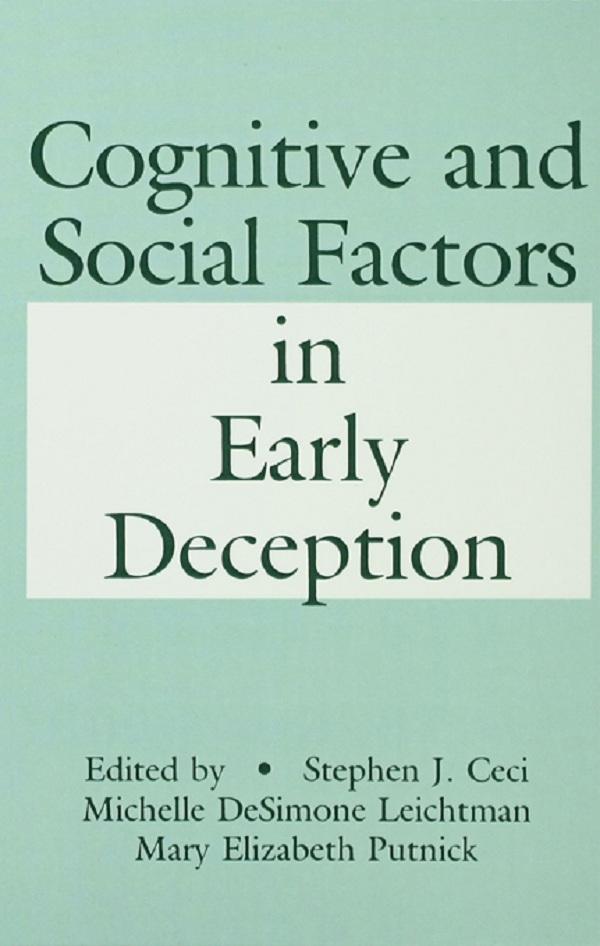
The understanding of early deception is important for both theoretical and practical purposes. Children's deceptive behaviors provide a window into their models and theories of mind. On a practical level, childhood deception poses challenges for the legal system as well as parents and schools.
In this volume, contributors from diverse areas of psychology -- social, cognitive, and developmental -- as well as philosophy and law examine the determinants of deception among preschoolers. In addition to a wealth of new empirical findings dealing with gender, motivation, and context in children's use of deception, evidence is provided for recursivity of awareness in children as young as three years of age. With chapters and commentaries written by leading scholars in the United States, England, and Australia, this book reflects a growing concern with ecological validity in developmental studies and may prompt rethinking of traditional models of mind based exclusively on data from laboratory experiments.
Pay easily by card, Klarna, Apple Pay or Google Pay. Not happy? You always have a 14-day money-back guarantee. Read more in our terms. If you have any questions, email us at hello@memmo.org.
Memmo makes studying easier – wherever you are in the world. We bring your course books and smart study tools together in one place: summaries, quizzes, podcasts and flashcards. Plus Ted, your study buddy who answers anything you wonder. Over 50,000 students already study here – built to help you learn faster and stress less.
You might also like
Buy the book0