
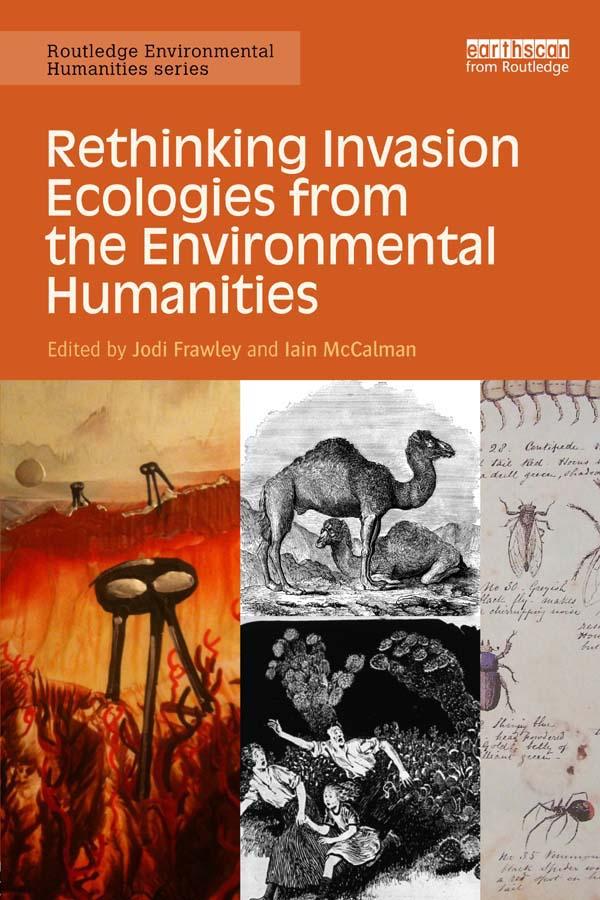
Research from a humanist perspective has much to offer in interrogating the social and cultural ramifications of invasion ecologies. The impossibility of securing national boundaries against accidental transfer and the unpredictable climatic changes of our time have introduced new dimensions and hazards to this old issue. Written by a team of international scholars, this book allows us to rethink the impact on national, regional or local ecologies of the deliberate or accidental introduction of foreign species, plant and animal. Modern environmental approaches that treat nature with naïve realism or mobilize it as a moral absolute, unaware or unwilling to accept that it is informed by specific cultural and temporal values, are doomed to fail. Instead, this book shows that we need to understand the complex interactions of ecologies and societies in the past, present and future over the Anthropocene, in order to address problems of the global environmental crisis. It demonstrates how humanistic methods and disciplines can be used to bring fresh clarity and perspective on this long vexed aspect of environmental thought and practice.
Students and researchers in environmental studies, invasion ecology, conservation biology, environmental ethics, environmental history and environmental policy will welcome this major contribution to environmental humanities.
Pay easily by card, Klarna, Apple Pay or Google Pay. Not happy? You always have a 14-day money-back guarantee. Read more in our terms. If you have any questions, email us at hello@memmo.org.
Memmo makes studying easier – wherever you are in the world. We bring your course books and smart study tools together in one place: summaries, quizzes, podcasts and flashcards. Plus Ted, your study buddy who answers anything you wonder. Over 50,000 students already study here – built to help you learn faster and stress less.