
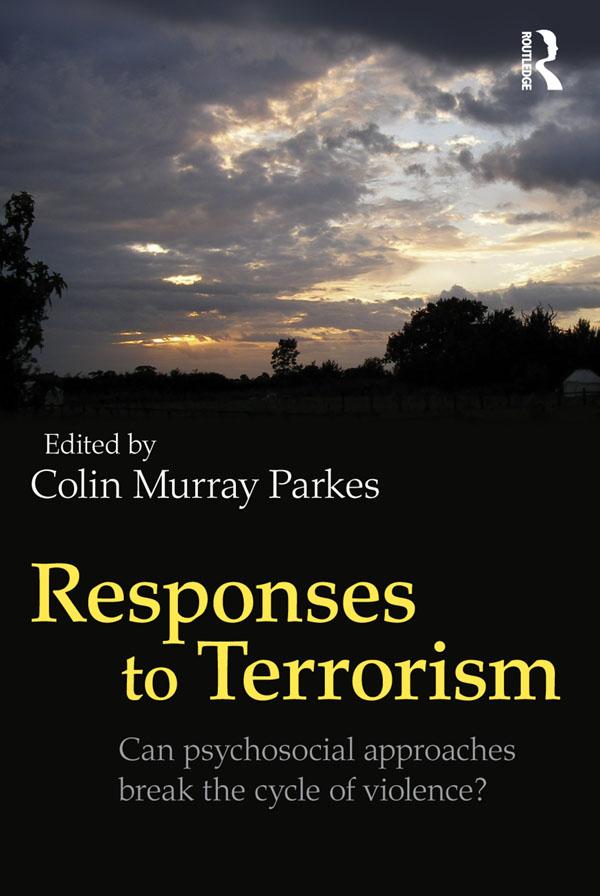
Why do responses to terrorist attacks often perpetuate cycles of deadly violence?
Can an understanding of the psychology of these cycles help us to break them?
Drawing on clinical experience of the care of people and communities affected by violence and disasters and on advances in cognitive and dynamic psychology, attachment theory, group psychology and thanatology, this ground-breaking work by a prominent and varied array of contributors casts light on the causes of terrorism, the reasons why responses to deadly attacks easily give rise to or maintain cycles of violence and some ways to prevent and interrupt these cycles.
Using the violence in Northern Ireland and Rwanda as case studies throughout, Part 1, The Context of Terrorism, looks at the psychological and social influences behind extremism, terrorism and conflict. Part 2, Reponses to a Terrorist Attack, examines the responses that can feed a cycle of violence and assesses a range of approaches for their success in ending violence. Part 3, Breaking the Cycle, looks in depth at specific environments, influences and changes that can affect how violence can be prevented or mitigated, including the role of schools and the media and an examination of how peace processes were carried out in Northern Ireland and Rwanda. The book works to demonstrate how psychological responses to a terror attack can trigger unstable emotional responses and override judgement and to identify the five key points in a cycle of violence where change, for better or for worse, is possible.
Ideal for psychiatrists, thanatologists, palliative care and bereavement staff, politicians and journalists as well as anyone with an interest in terrorism and its causes, this is a thought-provoking and accessible work on a highly topical subject.
Pay easily by card, Klarna, Apple Pay or Google Pay. Not happy? You always have a 14-day money-back guarantee. Read more in our terms. If you have any questions, email us at hello@memmo.org.
Memmo makes studying easier – wherever you are in the world. We bring your course books and smart study tools together in one place: summaries, quizzes, podcasts and flashcards. Plus Ted, your study buddy who answers anything you wonder. Over 50,000 students already study here – built to help you learn faster and stress less.