
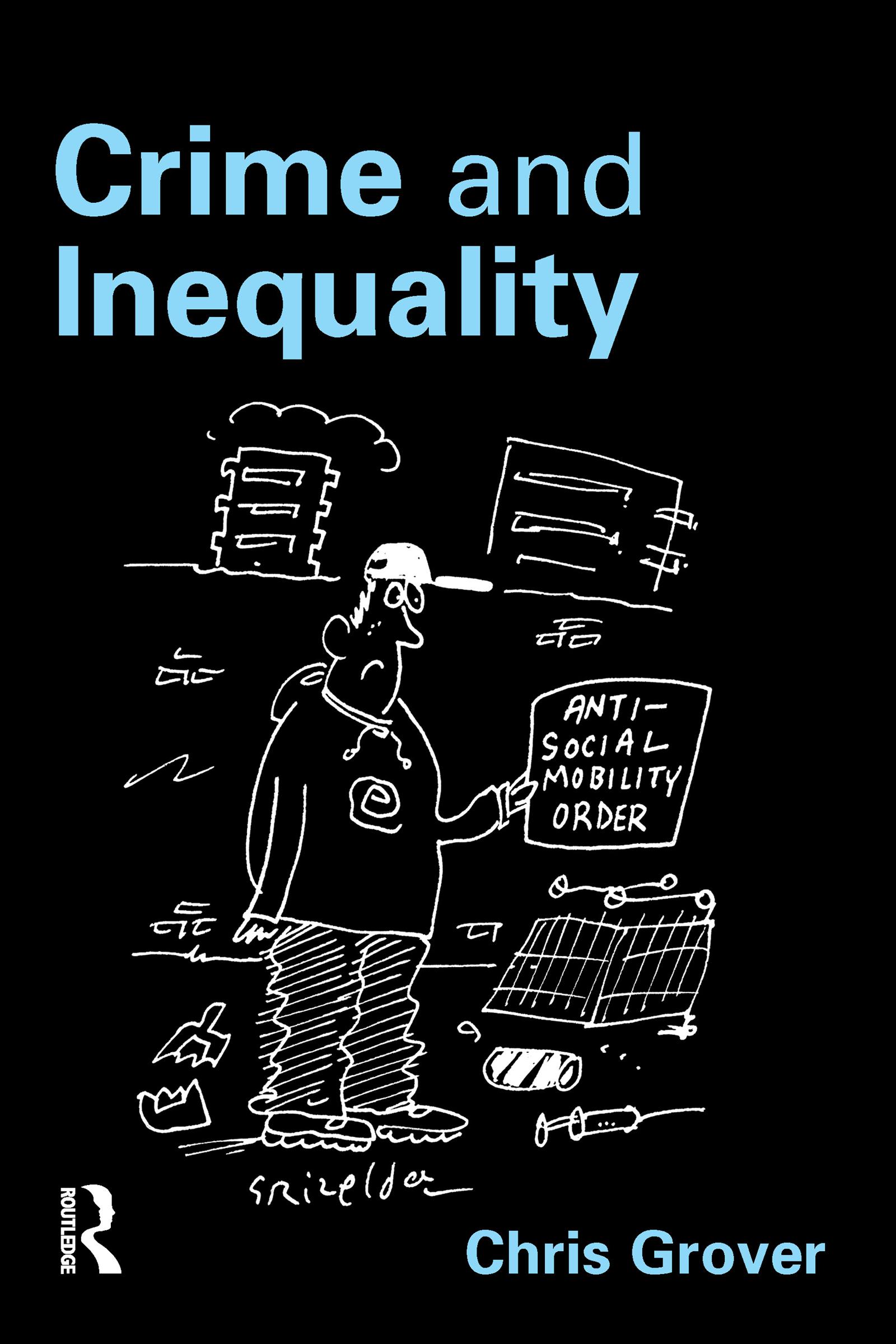
This book examines key relationships between material circumstances and crime, and analyzes the areas of social policy – in particular social security and labour market policy – that are most important in terms of dealing with inequality at the lower end of the income hierarchy. It seeks to explain why inequality is linked to offending behaviour and the evidence underpinning explanations for this, and looks in detail at the relationship between offending and anti-social behaviour and its management through social policy interventions.
Crime and Inequality draws upon both criminological and social policy approaches to understand this vital relationship, moving beyond criminological approaches which often fail to analyse the way the state attempts to manage poor material circumstance, offending and anti-social behaviour through social policy.
The main aims of the book are threefold: to draw upon the disciplines of both criminology and social policy to understand the relationship between crime and inequality; to provide an in-depth analysis of those aspects of social policy that have a bearing on the context, management and punishment of offending behaviour; to examine government crime and anti-social behaviour policies in the context of social security and labour market policies, and to identify the tensions that have resulted from attempts to address social justice issues while also making individuals responsible for their actions.
Pay easily by card, Klarna, Apple Pay or Google Pay. Not happy? You always have a 14-day money-back guarantee. Read more in our terms. If you have any questions, email us at hello@memmo.org.
Memmo makes studying easier – wherever you are in the world. We bring your course books and smart study tools together in one place: summaries, quizzes, podcasts and flashcards. Plus Ted, your study buddy who answers anything you wonder. Over 50,000 students already study here – built to help you learn faster and stress less.