
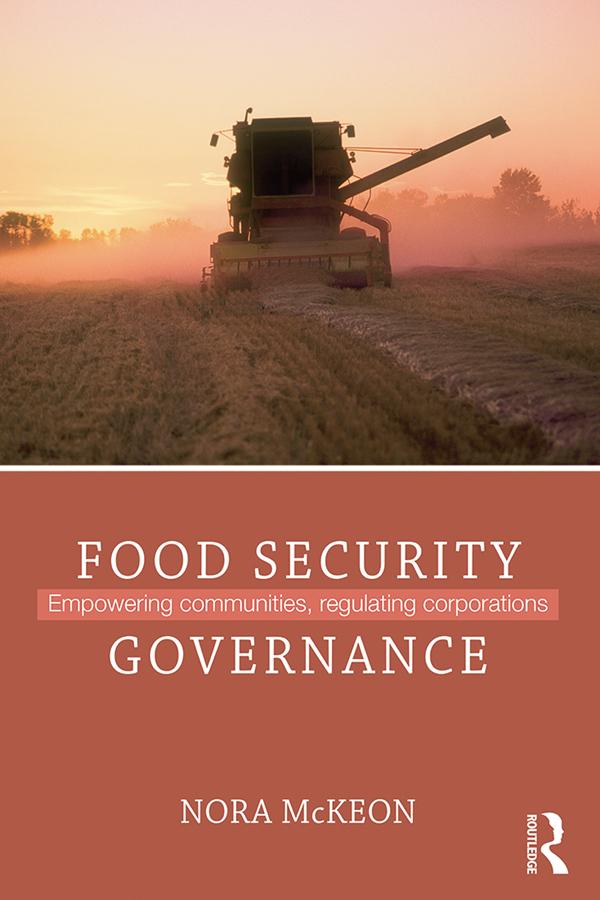
This book fills a gap in the literature by setting food security in the context of evolving global food governance.
Today’s food system generates hunger alongside of food waste, burgeoning health problems, massive greenhouse gas emissions. Applying food system analysis to review how the international community has addressed food issues since World War II, this book proceeds to explain how actors link up in corporate global food chains and in the local food systems that feed most of the world’s population. It unpacks relevant paradigms – from productivism to food sovereignty – and highlights the significance of adopting a rights-based approach to solving food problems. The author describes how communities around the world are protecting their access to resources and building better ways of producing and accessing food, and discusses the reformed Committee on World Food Security, a uniquely inclusive global policy forum, and how it could be supportive of efforts from the base. The book concludes by identifying terrains on which work is needed to adapt the practice of the democratic public sphere and accountable governance to a global dimension and extend its authority to the world of markets and corporations.
This book will be of interest to students of food security, global governance, development studies and critical security studies in general.
Pay easily by card, Klarna, Apple Pay or Google Pay. Not happy? You always have a 14-day money-back guarantee. Read more in our terms. If you have any questions, email us at hello@memmo.org.
Memmo makes studying easier – wherever you are in the world. We bring your course books and smart study tools together in one place: summaries, quizzes, podcasts and flashcards. Plus Ted, your study buddy who answers anything you wonder. Over 50,000 students already study here – built to help you learn faster and stress less.