
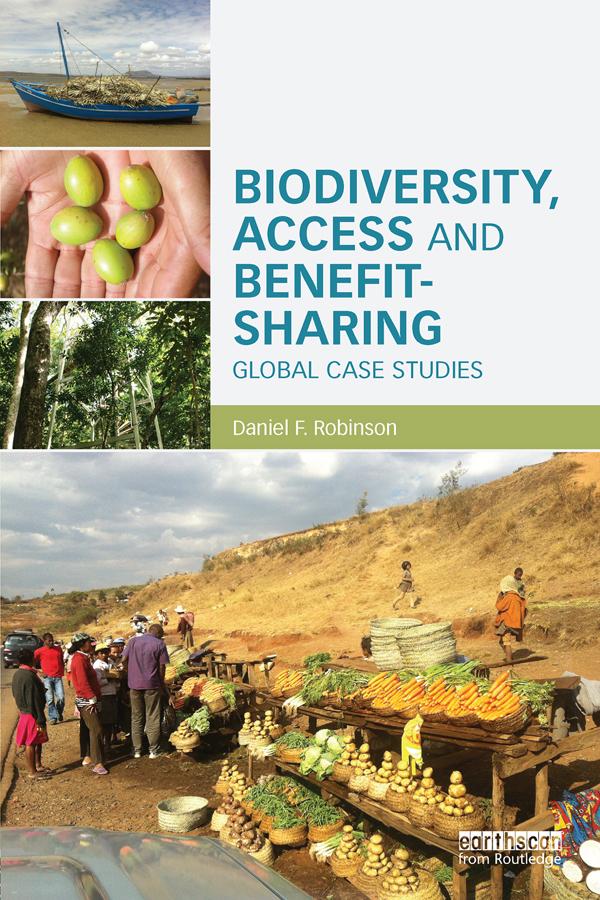
The Nagoya Protocol to the Convention on Biological Diversity (CBD) is rapidly receiving signatures and ratifications. Many countries are preparing to implement the protocol through national research permit systems and/or biodiversity laws. Yet there is still considerable confusion about how to implement the Protocol, regarding access and benefit-sharing (ABS) procedures, and minimal experience in many countries. This book seeks to remedy this gap in understanding by analysing a number of ABS case studies in light of the Nagoya Protocol.
The case studies are wide-ranging, with examples of plants for medicinal, cosmetic, biotech and food products from or for development in Australia, North Africa, Madagascar, Switzerland, Thailand, USA and Oceania. These will encourage countries to develop national systems which maximise their benefits (both monetary and non-monetary) towards conservation and support for local communities that hold traditional knowledge. In addition, the author analyses new expectations raised by the Nagoya Protocol, such as the encouragement of the development of community protocols by indigenous and local communities. As a result, stakeholders and policy-makers will be able to learn the steps involved in establishing ABS agreements, issues that arise between stakeholders, and the types of benefits that might be realistic.
Pay easily by card, Klarna, Apple Pay or Google Pay. Not happy? You always have a 14-day money-back guarantee. Read more in our terms. If you have any questions, email us at hello@memmo.org.
Memmo makes studying easier – wherever you are in the world. We bring your course books and smart study tools together in one place: summaries, quizzes, podcasts and flashcards. Plus Ted, your study buddy who answers anything you wonder. Over 50,000 students already study here – built to help you learn faster and stress less.